• Skip to main content
  • Skip to primary sidebar
  • Skip to footer

  • Home
  • About
  • Gallery
  • Classes
  • Trips
  • Books
  • Blog
  • Contact
  • Sign Up For My Blog

Blog

Have You Ever Made a Double Wedding Ring Quilt?

December 31, 2012 6 Comments

The past few days I’ve been getting back into some creative stitching by starting on a “small challenge” quilt through the Milwaukee Art Quilters. The challenge is called Objet D’arc and each participant was given a vintage double wedding ring (DWR) arc from a rummage sale find and asked to do something with it.

Double Wedding Ring arcs

I’m not ready to unveil the plan for my quilt yet, but part of it involves making a traditional DWR block with modern fabrics. The problem is I don’t enjoy curved piecing. I have a garment background and am capable of doing it, but it’s just not my favorite technique. I do however enjoy coming up with ways to avoid curved piecing! First I needed a pattern, so I did an image search, cropped a block out of a quilt photo, printed 4 copies, and outlined the arcs with a black marker.

I then cut out the curved strips and paper pieced them from my fishbowl of bright scraps!

At this point I decided to appliqué the curved edges, so I wet the seam allowances with liquid starch and a q-tip and pressed over the edge of the paper (be careful not to get the paper wet).

The next step involves clear thread. Be sure to use a good quality polyester invisible thread (not nylon – I prefer Superior or Sulky). At this point I’d like to insert a few tips on machine stitching with this thread.

1. If your machine warns you when the bobbin in nearing empty, it may not read low levels of the clear thread and thus stop you from sewing long before you reach empty. To avoid this, wind a bit of a cotton thread on the bobbin first and then wind the clear thread over the cotton thread.

bobbin filling

2. This is a very thin, strong thread and it winds very tightly on the bobbin. I’ve seen bobbins actually break from the pressure, so it’s a good idea to only fill them 1/2 to 3/4’s full.

working with invisible thread

Now back to appliqué. I pinned the arcs in place on the background fabric and stitched them down with the invisible thread and a very narrow zig zag (set stitch width and length at 1).

machine mock hand applique

This looks best when the needle pierces the appliqué piece as it swings left (in the picture above) and goes into the background only when it swings right, thus capturing the folded edge. I appliquéd all of the arcs in place this way and here’s the block:

double wedding ring

Then the paper needed to be removed by cutting away the background fabric:

It worked quite well. I don’t think I’ll ever do a bedsized DWR quilt this way, but it was fun in one block.

Have you ever made a DWR quilt the traditional way? I’d love to know how many of you enjoy curved piecing. Please comment and let me know.

Labeling Vintage Quilts

July 9, 2012 2 Comments

JoLynn recently wrote me with an antique quilt story:

“I found this old quilt this last month in the middle of the hwy in Texas. It is a grandmothers fan quilt pattern. It needed a lot of repairs so I washed it and I am taking it apart and restoring all of the damaged fan blades. I love how you would not think to add such non matching colors together. I went to the store and bought some of the same colors to replace the ones that were damaged. I have no clue how old this quilt is but it was all hand done. I myself make quilts but I use the sewing machine. :) I am wanting to come up with some type of lable for the quilt but dont have any ideas. If you have any ideas please let me know. Thanks……. Oklahoma Self”

I did a blog post last October with instructions for creating simple labels for vintage quilts. You can click here to read all about it (be sure to read Lucy’s excellent instructions for making labels with the computer). JoLynn’s request made me realize that often we don’t know the quilt’s previous history – so does it really need a label? And if so, what should be on it? My answer would be yes because every quilt has a story we do know: who currently owns it and how they acquired it. JoLynn’s quilt has a wonderful story of adoption and caring and it should be on the label, along with her name, place and date.

Taking the time to label vintage quilts, especially if you have a collection, may be the difficult part. I was guilty of this for years and than a dear friend, Maggi Gordon, wrote a book entitled Vintage Quilts. She was interested in including a number of my quilts. Before I could give them to her for photography they needed to be labeled and now I’m so grateful to have them in the book and the labels done!

This is a wonderful guide for identifying and pricing old quilts and can be obtained through Maggi at: http://www.maggigordon.com/

And now for a plea. I’m currently putting together a new lecture called “Tradition with a Twist”. It will include vintage quilts and modern interpretations. I’ve been collecting the older quilts for a while and find there are still 2 patterns I don’t have. I’m looking for an old (30 years or older) Pineapple Log Cabin and a Burgoyne Surrounded. It you have either of these you would be willing to part with, please let me know and we can talk about it :-). Thanks!

PS I had a wonderful visit with my daughter and grandkids in Washington. I can’t resist sharing a few pictures. Here is Rainee Lynn at 2 weeks old:

and her sister and brother, Hanna and Willy:

Label the Old

October 30, 2011 3 Comments

After enjoying Eileen’s story about her antique quilts last week and having the opportunity to present my antique quilt lecture in Manitowoc, I decided it was a good time to recommend putting labels on our family heirlooms. I’m always encouraging students to label their quilts – and this goes for the vintage ones you own, even if you didn’t make them yourself.

I have some wonderful antique quilts. Some are from my family and others I have collected. No matter how I got them, I always appreciate knowing their story. I truly wish some of them could talk, so I’d know the who, when & where. But alas, very few older quilts are labeled. It’s a shame because it can increase their value immensely. So label them! If you have their entire history – great! If not, put down what you do know, even if it’s just that you own it and how you acquired it.

The easiest way to create the label is to:

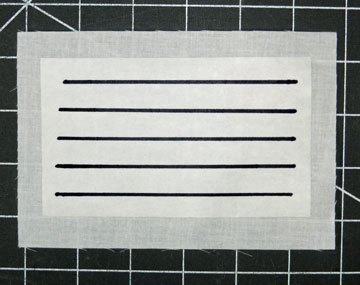
1. Cut a piece of freezer paper the size you desire the label to be and draw parallel lines with a Sharpie™ marker,  1/2″ apart,on the dull (paper) side. 

2.Iron the shiny side of the freezer paper onto a piece of muslin (this view is of the lines showing through to the muslin side).

3. Write the label information on the muslin with a fine line fabric marker (I prefer the Micron Pigma™ marker, size 01), using the freezer paper lines as guides to keep your writing straight.

4. Remove the freezer paper, turn under the edges and appliqué the label to the back of the quilt.

Creating labels on a computer and printing them onto colorfast printer fabric is another good option.

What information should you include? Who made it. When. Where. For whom. Who owns it. When. Where. Anything else you’d like someone to know when you’re no longer around to tell them.

Remember to label your current quilts too. They may not be around 100 years from now, but if they are, someone may want to know about you :-)!

Howe Many Machines Do You Own?

July 31, 2011 14 Comments

If you want to feel better about your sewing machine collection, read on. Up until recently I owned 6 (but one’s a treadle that’s being used as an end table, so I’m not sure it counts). I recently acquired #7…with my husband’s blessing, and I can’t wait to share. We were wandering through an antique store in Fort Atkinson, WI when this machine caught my eye:

For many years I’ve been presenting a quilt lecture about my collection of antique quilts entitled “But I Still Love You”. In it I share some sewing machine history, including information on Elias Howe, the “inventor of the sewing machine” (there were other machines invented in other countries, but his was the most user friendly and marketable, so he’s credited with it). There is actually a plaque on the machine with a bust of Elias Howe and the words “Elias Howe Jr; Inventor and Maker; New York, USA”.

The machine has been mounted in a case with a glass front and a light inside so that the mechanism underneath can be viewed when the crank is turned.

The case has a plaque that reads: “Inventor: Elias Howe; Patent #4750 Granted 9-10-1846; circa 1865-67; Restored by Carmon M. Howe; 1991”. I was able to contact Mr. Howe and he told me he is not related to the inventor. He found the machine on the 3rd floor of an antique store in LaCrosse, WI with about an inch of dust on it. When he saw the name – he had to have it :-). He said it won’t run because the bobbin mechanism was missing. We had a lovely conversation and he told me to enjoy the machine. I am already.

 After a bit of web surfing I found a photo of the same model machine as mine and it is indeed from 1867!  I searched for more details about the machine and found very little. I did find a wealth of information about Elias Howe and am anxious to share it in future lectures.

So, anyone own more than 7 sewing machines???

But I Still Love You Too

November 18, 2010 2 Comments

My lecture in Amery was a delight! A fun group of quilters and a lovely visit with my cousin Kathy.

I’d like to welcome some new readers to the blog. I not only shared my antique quilts up north on Monday, but Tuesday night I presented a talk about  my “Sew We Go” adventures with Wendy to a guild in Oak Creek (south of Milwaukee) and Wednesday morning I did the same talk for a guild in Fox Point (north of Milwaukee). Many of the quilters I spoke to gave me their email addresses and I’ve added them to the list. I’d just like to mention to them or any one else who’s new to the blog that by scrolling down through the blog or clicking on the archives you can read about some of our past topics. From photographing your quilts, to UFO’s (ultimately fabulous opportunities) and many topics in between, there’s been a lot of great information shared :-)!

Now to get back to antique quilts. Thanks Barb, for sharing your quilt’s story. I’d like to share a quilt and it’s story from my lecture. I don’t know the history of many of my quilts, but this Sunbonnet Sue quilt has a story I do know and it’s worth telling:


A few years ago I presented “But I Still Love You” to a historical society and one of the women present asked me if we could meet for lunch. Her name was Vivian and at the restaurant she showed me this quilt and told me it’s tale. It was made by a friend of Vivian’s grandparents for her when she was a baby (I have all the names and dates – hooray!). She snuggled with it while she was growing up and then packed it away. When Vivian was married and expecting her first child she unpacked it and showed it to her husband. When she told him the pattern was called Sunbonnet Sue he responded that if they had a girl they should name her Sue – and they did! Sue snuggled with it while she grew up just like her mom.

Well, since then Sue had moved to California and Vivian and her husband were struggling with some health issues. They had decided to sell their home in Wisconsin and move to California to be near Sue. Vivian came across the quilt while packing and called Sue. She told her mom she really didn’t want it :-(. Vivian couldn’t talk her into it and so she decided to offer it to me after seeing my talk. I was honored. She said she wanted it to be well cared for and appreciated. So I’m pleased to share it in my lectures and here with you.

If you have a quilt with a story to share, please send it as a comment to this post. Most quilter’s I know have a warm spot in their hearts for antique quilts and the stories that make them special.

But I Still Love You

November 14, 2010 1 Comment

I just finished packing up my collection of antique quilts to take with me tomorrow as I head to Amery, Wisconsin to do a talk for a guild there (its not far from the twin cities). It was a happy coincidence that I have a cousin who also lives in Amery. What a great opportunity to share my love for quilting with a new guild and spend time with Kathy too. Once again I just feel so blessed :-).

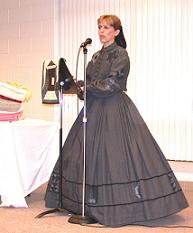
The lecture I’ll be doing shares the same name as this post. In it I wear a Civil War era dress and hoop skirt that I made to go with the lecture. Most of my quilts are not museum quality, but I love them and enjoy sharing their stories. I’ve probably presented this talk more than any of my others and it is one of my favorites. The best part is even non-quilt groups (historical societies, Christian women’s groups, etc.) want to hear it and so I’m able to share my passion for quilting with  some people that aren’t yet adicted!

Do you have a quilt that’s a family treasure or just a vintage piece with a delightful story? I feel most quilters enjoy hearing about these bits of our history and I’d be so happy to hear about yours.

  • « Go to Previous Page
  • Page 1
  • Page 2

Primary Sidebar

Archives

Recent Posts

  • London ~ and More
  • Designed For a Purpose
  • Squirrel Quilts and More
  • Vintage Appliquéd Arrows and More
  • Fascinating Tidbits

Recent Comments

  • Karen Ann Moore on London ~ and More
  • Cheryl McLean on London ~ and More
  • Sue Halpern on London ~ and More
  • judy raddatz on London ~ and More
  • Joanne Corrigan on London ~ and More

Categories

Footer

My Guide

Whatever you do, do your work heartily, as for the Lord rather than for men.

—  Colossians 3:23

Contact Chris!

  • Home
  • About
  • Gallery
  • Classes
  • Trips
  • Books
  • Blog
  • Contact
  • Sign Up For My Blog

Copyright © 2026 · Chris Quilts · Website by Adunate · Privacy Policy