• Skip to main content
  • Skip to primary sidebar
  • Skip to footer

  • Home
  • About
  • Gallery
  • Classes
  • Trips
  • Books
  • Blog
  • Contact
  • Sign Up For My Blog

Blog

Choosing a Color Palette From a Photo

October 18, 2020 7 Comments

I did a bit of web surfing and found a great site for picking colors out of a photo. It’s called the Image Color Picker and you can find it at https://image-color.com/. This is the image you’ll see when you go to their site:

It was so easy to use. I simply dragged my photo into the box just above the palm tree pic on the site, and it opened up with the color palette already created.

It “chooses” the colors (hues) that appear in the greatest quantity, so black/brown is “dominant”, but just look at the beautiful palette below that. We can easily go to our stash, or our favorite quilt shop, and pick out fabrics in these colors, knowing they will work well together in a quilt. Here’s another one:

Once again – a beautiful collection of hues for a quilt at the bottom. Since the bright “pops” of color in the photo are in smaller quantities, they don’t show up in the palette, but that doesn’t mean a bit of bright orange or yellow can’t be added!

Wouldn’t this make a great palette for your next Christmas quilt?!?

I must admit, I’m having a lot of fun with this site!!!

And here’s a photo Laurie sent me last week, along with it’s palette:

A beautiful collection of colors from just a single leaf!

So, I decided to look through my quilts and do things a bit backwards to give you an idea of how the colors around us could be used in quilts. This first image is of a bunch of leaves I found clustered together on my deck after a rain (isn’t God’s mastery of color amazing?), and the main colors pulled by the color picker site:

This quilt uses fabrics in this palette, plus a few of the brighter colors in the photo to spice things up 😁.

And here’s a palette taken from a tree in my backyard, followed by another of my favorite Autumn quilts:

I don’t really see much of the violet color from the palette in the photo, but it’s ok to leave out what doesn’t work and add a few of the brights.

This is just a tool to get you started. I hope you have some fun with it!

And, since I’ve been sharing photos, I can’t resist a few of Sommer and Trey jumping in the leaves! It’s been a beautiful Autumn and the leaf pile in our yard was huge!

Color in Nature and Quilts

October 11, 2020 5 Comments

During “Safer at Home” my granddaughter’s school did a great job of finishing her second grade year online. At that time Daddy and Mommy let her get her first email account, and mine was the only email address she knew, so we communicated daily. She would send me a “Daily Hi” every morning (this was her idea 😊).

One day she had to gather items of different colors for art class, and send a photo back to the teacher. She sent it to me too:

I responded “Wow, what a great color wheel. Were you supposed to make a color wheel?” She said she was only supposed to pick out objects in all the colors. After she gathered all the pieces Mommy helped her to put it into a color wheel (Betsy is a graphic designer and she’s inspiring a love of art in her kids).

This got me to thinking about all of the amazing colors around us and how they can inspire us in our quilting. I tried to get out for a walk every day during that time and snapped a few pics of the colors of early Spring. I certainly needed a bit of brightness to get through that difficult time!

I recently went through some of my Summer photographs and found a few that inspired me with their colors:

Wild lilies on the edge of our pond (taken from the canoe)
This is my parent’s cottage on Lake Sinissippi. Don’t you just love the red pump and the sun dappled grass?

And now Autumn is in full swing. This is by far my favorite season, and I once read a meme that stated “Autumn is my favorite color”. I agree!

I think what intrigues me the most about these photos is how the colors are so wonderful together – especially in nature. God certainly knows what hues play well with each other! In fact, I recently took this photo

and it reminded me of a quilt I made using these colors a few years ago:

I call it Interchange, and it was made for a “Color Wheel Opposites” challenge. I wanted to see what would happen if I took two opposing colors on the color wheel and laid out squares of the “raspberry” that went from dark at the top to light at the bottom, with squares of “yellow green” that went from dark at the bottom to light at the top. I also challenged myself to only use fabric from my stash. It’s finished with a facing because I thought a border would detract from the intent of the piece, and it’s quilted with “wheels” of intricate stitches. These opposing colors certainly are beautiful together – in nature and fabric 😃!

So how does one translate the colors in a photograph to fabrics in a quilt? Well, join me in next week’s post and I’ll share a few ideas!

If you’ve made a quilt inspired by colors in a picture – please email me photos – I’d love to see how you were inspired!

String Pieced Diamonds

October 4, 2020 9 Comments

As promised, I’ve put together some step-by-step instructions for anyone interested in how my most recent project is made.

Full credit goes to my friend Lori Schloesser for this fun pattern. Besides loving the look, it solved one of my scrap dilemmas. Whenever I complete a project, all of the leftover strips and chunks usually end up in a pile because they don’t fit easily into my “neatly” arranged fabric storage. Typically, I eventually try to fold these pieces, according to color, and wedge them in between yardage in the stash. I think of them as “blobs”. With time this proves to be a cluttered, tippy disaster.

For this project I wanted to use a majority of greens, with a good amount of browns. So I pulled all of those awkward “blobs” out of those color areas in the stash. They are gone from it now and I saw an improvement in my fabric carts immediately (and my greens were far messier than the color cart above)!

I also grabbed a few “blobs” from other color areas in my stash that had green in them. Some were mainly red, some orange, some purple, etc. These added contrast and interest to the blocks.

I cut all the “blobs” into strips in a variety of widths, in 1/8″ increments, ranging from 7/8″ to 1 5/8″. The pieces that couldn’t be made into strips of at least 6″ lengths were put in a basket to be used as “corner fillers” (we’ll get to that later).

Then I dug into my fish bowls of scraps/strips for additional pieces that fit my color scheme or would add some pizazz.

Once the strips were cut I put the long ones in a grocery sack on the floor, and anything less than 14″ long went on the table.

The paper bag to the left is where I toss the remainder of a strip after I’ve sewn it onto one of my rectangles.

Next I cut paper foundations at the finished size of my blocks – 5″ x 10″. I began by using up the scrap paper next to my computer and when that ran out I grabbed an old phone book. My king quilt will require 210 blocks.

Each paper pattern needed to have a diagonal line drawn on it and, to make the design come out right, half of them need to go upper left to lower right, and the other half upper right to lower left (reversals)!

To begin a block I reach into the bag full of strips and pull out two without looking 😊, place them right sides together – aligning the right edge, and lay this edge against the diagonal line; leaving at least 1/4″ excess hanging off the paper at the beginning and end of the seam to assure a proper seam allowance.

I like to chain piece about 20 blocks at a time in this way, cut them apart, and press the strips over with a dry iron.

Then I grab a new strip out of the bag and add it to each block, trimming the excess away and tossing the leftover strip in the empty grocery sack, unless the cut-away is less than 14″, then it goes on the table for later use.

Notice how the ends of the strips extend beyond the edge of the paper when pressed flat. Adding the seam allowance in this way is essential.

I continue in this manner until there is a small triangle left to be filled on each side of the strips. This is when I grab the non-strip pieces and “sew and flip” them in place to fill the corners. Sometimes the corner is small enough that one of the wider strips will work, but most often I need to use a chunk from the basket.

When the paper is covered and pressed, I turn the block to the paper side:

and trim the blocks 1/4″ away from the pattern:

rotating the block to square up the other corner. With seam allowance these blocks measure 5 1/2″ x 10 1/2″. And voila – a block is done!

All the trimmings don’t go to waste either.

I use them to fill old pillowcases found at resale shops, sew them shut, and donate them to our local humane society for use as cat beds.

I am actually using up these frustrating leftovers, and I find making the blocks quite addictive. When the blocks are all made, and it’s time to put the top together, I’ll share that part of the journey with you too!

Clues in the Quilts

September 13, 2020 1 Comment

Last year the small fiber art group I belong to, the Fiberistas, held a challenge based on a game. It was a lot of fun and I recently realized I never blogged about it. So here we go:

You probably have played the board game Clue™. Kay came up with the idea to challenge each of us to make a quilt based on clues from the game: a room, person, and weapon. Without peaking she chose three clues for each of us, put them into an envelope, and asked us to make a small quilt that would include the clues without giving the answer away too easily.

This is the quilt I made from the clues I recieved:

And here’s a detail image of the quilting:

As I’ve mentioned before, I love puzzles and mysteries, so I had a delightful time thinking about how to execute my 18″ square quilt. The stacked dishes were cut out of a fabric I purchased in Sweden on our Sew We Go to the Baltic Sea cruise in 2014. I fussy cut them out and machine appliquéd them onto a piece of hand-dyed fabric. Then I added clues in the quilting. I enjoyed every step of the process. Can you guess who did it, with what, and where???

Don’t peak until you think you have the answer.

*

*

*

*

*

The answer is in my envelope:

Yes – it was Mr. Green in the Kitchen with the Candlestick!

To see all of the wonderful pieces made for this challenge please visit our Fiberista’s site by clicking here!

*******************

And one more thing:

As many of you know, one of our favorite local “quilt shops” is going out of business. Ben Franklin Crafts in Oconomowoc has had a great fabric department as long as I’ve lived in this area.

The store and the people there have been a wonderful part of my quilting life. Well, they will be closing their doors forever on October 3rd. This was caused by a combination of things, but in the end the pandemic was the last straw. So many losses over the past months! The store announced recently that the mark down is now 50%.

When I first learned of the closing I was very disappointed. I couldn’t bring myself to even go in the doors for weeks. When I learned that they were selling all the fixtures, and Mike and I had been discussing that we needed another book shelf, we decided it was time. We actually bought two shelving units and I am thrilled to now have a little bit of one of my favorite places in my living room to remember them by.

I must admit I have a lot more of their fabric in my stash now too.

Thanks to Terrie, Mary, their staff and customers, for many, many sweet memories!

Fibonacci in Quilting

September 6, 2020 3 Comments

I first heard the name Fibonacci years ago at a Milwaukee Art Quilters meeting. Having a degree in Dental Hygiene, art theories and terms were not typically in my vocabulary. But I loved geometry in high school, so this sequence of numbers grabbed me immediately. Let me share a bit of an explanation for those of you who have no idea what I’m writing about.

The Fibonacci sequence is a series of numbers in which the next number is attained by adding the previous two numbers:

1, 2, 3, 5, 8, 13, 21, 34, 55, 89 …

This series can be used to model or describe an amazing variety of phenomena in mathematics, science, art and nature.

I did a quick walk through my yard and saw Fibonacci numbers everywhere. For example: my coral bell leaves have 5 main veins – and 5 is in the series:

Impatien petals come in 5s too.

Each branch of leaves I counted on my marigolds had 13 leaves.

And all the little clovers had 3 leaves (no 4 leaf clovers to be found):

An ear of corn has 13 rows. I didn’t have one handy to share a photo so, since it’s still corn season (sadly nearing the end of corn season), feel free to count the rows the next time you enjoy one.

And the human body is filled with these numbers: 1 head, mouth and nose; 2 eyes and ears; 5 fingers on each hand, and toes on each foot.

The mathematical ideas the Fibonacci sequence leads to, such as the golden ratio and spirals, are often appreciated for their charm and beauty.

When the Fibonacci series is drafted on a grid a spiral results.

I was thinking it might be interesting to continue the grid above, and then make it into a quilt – using a different fabric for each area of the grid. It could be a fun “modern” crib quilt!?!

This spiral is found many places in nature. The example I’ve seen cited most often is the nautilus:

a pinecone is another example of a Fibonacci spiral:

I marked in the spirals on this image to make them more obvious (and the cool thing is – they actually spiral in both directions!):

And isn’t this vegetable I bought at the farmer’s market a beautiful example of the spiral?

When any two successive fibonacci numbers are taken as a ratio (ie. 34/55), it is very close to the “Golden Ratio” which is approximately 1.61803.

For a better explanation than I can give you of this concept click here 😊.

If you are intrigued by the Fibonacci series and would like to learn more click here. To watch a short, easy to understand video about this fascinating topic click here.

So, what does this have to do with quilting???

Well, these numbers are supposed to be visually pleasing and the Milwaukee Art Quilters often chose their challenge quilt size to fit the Golden Ratio. Both of these challenge quilts were made according to this ratio:

Portals challenge – the Narrow Gate by Chris Lynn Kirsch
Art Deco challenge – Forty Wonderful Years by Chris Lynn Kirsch

Wendy was inspired to begin our collaborative quilt “Welcoming the Son Into Our Garden” by a photograph she’d taken of sunflowers.

The center of sunflowers is always a fibonacci spiral, and her photo was so perfect she decided to simply photo transfer it onto fabric for the quilt.

When I was coming up with a quilting design for my Compass Craze quilt, I decided to use a Fibonacci spiral spinning out from the center of the quilt.

I marked it on the quilt, stitched on the lines, and filled in with tiny spirals.

Here’s a detail for a clearer view of the spiral:

Perhaps if I had free-hand drawn the spiral it would have been just as visually pleasing, but I am very happy with these results.

Have you ever used this series in any of your quilts? Do you think you might try it in the future?

Even if it’s not your thing – I hope you found it interesting. God has made His creation beautiful and orderly, just like we attempt to do with our quilting.

Time to Get Away

August 30, 2020 14 Comments

Since I posted about traveling in my mind last week, I’m excited to share that I actually, physically went somewhere this past week!

Last year my friend Laura discovered a beautiful quilt retreat center in Poynette, WI. Early last Spring she planned a weekend retreat for this past weekend and, even though a few of our group had to cancel for various reasons, Laura, April and I are very glad we made the trip!

As I packed up the car my sweet husband made sure all was well for my hour long drive (I loved that it wasn’t very far from home).

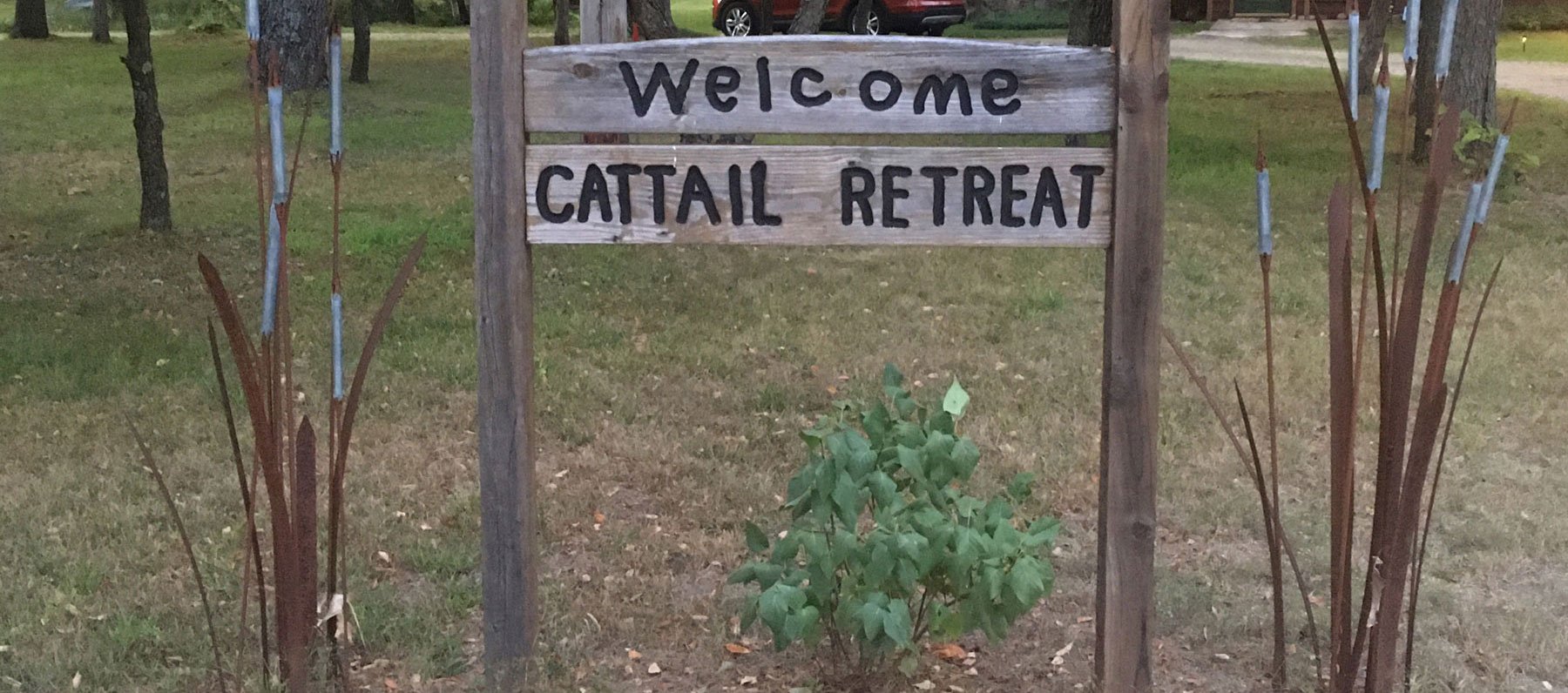
I didn’t realize how ready I was for some new surroundings – and time with friends, and Cattail Retreat didn’t disappoint.

The accommodations were very comfortable, and the sewing room was perfect.

With only 3 of us we were able to spread out and get some serious (😁) sewing done.

We took turns making meals, but breakfasts were on our own. I especially loved spending some morning time in the second floor porch.

My first project got it’s start as blocks made by a dear lady in my guild. Carole was a very giving member who passed away last year. Her husband donated much of her quilting stuff to Patched Lives, saying the proceeds were to be used by our charity quilts committee. Many of us purchased fabric and UFOs from her collection, and are finishing them as charity quilts. I bought these beautiful star blocks and pieced them into a lap-sized quilt. A double donation! Once that top was together – on the left – I began a scrap quilt for myself (right):

This scrappy green quilt will eventually be king sized. I was inspired by one made by my friend Lori. The blocks are paper pieced rectangles, and I’m using green scraps, with a few surprises thrown in to add excitement.

I ended up using pages from an old phone book for the foundation, and cut strips of various widths from my scraps.

These blocks are fun, easy, and I’m actually using up some of my bin of scraps! Thanks Lori!

I highly recommend spending time with quilting friends – it is great for our mental health. Click here to learn more about Cattail Retreat.

If you’d rather stay closer to the Milwaukee area, I have two friends who have recently opened wonderful quilt retreat centers.

Mom’s Place

Lou has remade her mother’s home in New Berlin, WI, into a lovely place for quilters to relax, stitch, and spend time together.

Click here to learn more about Mom’s Place!

Tall Pines Retreat

Laure and Hans have renovated this beautiful home in Mukwonago, WI. They’ve made it into the perfect spot for quilters, or any crafters to spend time together doing what they love.

Click here to learn more about Tall Pines Retreat.

No matter where you are, I hope you are finding time to escape into our wonderful world of quilting with friends.

***************************

This is a follow-up email I received from Carol after my post about barn blocks.

“WNCQG sub group did a program in January 2020.  These were very easy.  Precut plywood from Lowes that was primed on all sides and edges.
 (24” x 24”) Then we marked and painted with outdoor paint.  My husband made the frame and I will paint it the same red.
Hope this helps.“

She certainly did a great job! Thanks Carol!

Traveling in Our Minds

August 23, 2020 6 Comments

During this time of limited travel, I’ve been thanking God for all of the wonderful trips I have been blessed to take throughout my life – and you’ve joined me on many of them, if only via my blog :-). I have had moments of being a bit stir crazy over the past six months, but am grateful for my family, my church, and quilting.

I finally reached a point where I admitted to myself I needed to use this time more wisely (my teaching engagements have almost vanished), and began to clean out my studio. As I went through the books on my shelf I came across two that brought back fun memories, and one of them wasn’t about quilting at all. Here’s the story:

My book, Repliqué Quilts was published in 2001 and went out of print in 2004. At that time I purchased the residual books and loaded all 967 of them into my basement (Over 18,000 had been sold – praise the LORD!). It took awhile, but eventually all of them sold and I now wish I had more – as many newer quilters have shown an interest in Repliqué. But I digress.

To continue the story: way back in 2010 I received an email from Ann in Kamloops, British Columbia. She wanted to purchase a copy of Repliqué. The problem was I had no way of accepting credit cards or foreign checks/currency at that time. Rather than over thinking it I sent her the book and asked her to send me a book from her area that she thought I might enjoy. It turned out to be a delightful exchange (click here to read the original post).

About a week later she sent me the second book about Laurie Swim; a very talented Canadian art quilter.

So, when I pulled out these books I opened them to read the story about our exchange, only to find I hadn’t recorded it on the inside cover – as I had hoped. I felt it needed to be there and thus the books have been written in and this post came to be 😊.

My studio cleaning came to a complete halt while I dove into revisiting Kamloops, and Laurie’s quilts.

Then I searched back through my emails and discovered that Ann had used my Repliqué technique to recreate a photograph in fabric, and I’d never shared it on my blog. So this is a bit late in coming, but here’s what Ann wrote to me way back in 2010:

“Hi Chris, I just finished the attached art quilt – wall hanging which I thought you might like to see. Your generous contribution of the book helped a lot. Thanks so much.”

Stunning!

Dear Ann, If you’re still reading my blog posts, I’d like to thank you again for the fun we had with our “Kamloops Kapers”. Please let me know how you’re doing. Have you made any more quilts using Repliqué?

Bending Threads II

August 2, 2020 4 Comments

I actually have two topics to share this week. So before I delve into a follow up post to the bobbin work from last week, I really need to tell you about the upcoming fundraiser auction for the Wisconsin Museum of Quilts and Fiber Arts. It takes place this week and begins tomorrow – Monday, August 3rd!!!

This image has an empty alt attribute; its file name is wmqfa-for-blog.png

I’m excited to be on the auction block – or at least for my work to be 😁. Here are the details of what I’m offering:

“You and three friends can participate in a 6-hour workshop provided by Chris Lynn Kirsch and held at the Wisconsin Museum of Quilts & Fiber Arts.  Enjoy the day learning a new technique, improving a skill, or having a fun and creative experience with friends, led by an award-winning quilter and teacher.  Select from Chris’s workshop offerings, found on her website: https://www.chrisquilts.net/classes/.”

I know there will be many other great items up for auction – and all the proceeds benefit our museum. So please join in on the fun! I apologize that the link in the image above doesn not work. Here’s the actual link to the site: https://www.wiquiltmuseum.com/calendar-of-events

Bending Threads and Bobbin Work

In response to last week’s post, my dear friend Evelyn sent me some wonderful photos and information about her experiences with bobbin work – and you’re gonna love it!

Evelyn has been featured in quite a few of my posts. She has been a blessing to me in so many ways. She was the friend who taught me how to make my Japanese jacket, inspired my “A View From My Window” challenge, she acted as my agent to get me teaching opportunities in Alaska and Arizona, she has used my “Crossing” technique in a variety of fascinating quilts, and is infamous for her part in our Quilt Sissie kidnapping adventure. If you have a little spare time, you may want to read some of those previous posts. Simply click on the subject of each one above to be linked to them.

This was her response to last week’s Bending Threads post:

Hi Chris, I’m sending photos of some of my bobbin embroidery quilts to use on your blog if you want to.  I’ve taken a close-up and a full quilt picture of each one.  I still have about 30 bobbins with the “thread” on them.


“I’ve tried lots of different threads.  It’s the only way to use decorative threads that won’t go through a machine needle.  The easiest to use is perle cotton, size 8, but I’ve also used sizes 5 and 3.  It’s great for metallics, too, or even multi-strand floss.  In most cases, I do the embroidery through a single layer before sandwiching, but it can be done as part of the quilting. 
I wanted the basket in this wallhanging to show up better, so I outlined the basket on the right side, then turned it over and stitched the lines to make it look woven.
“

“One of the first pieces I used the bobbin embroidery on was this multi-technique vest.  I used size 3 perle cotton to make the spider webs. You can’t get much thread that size on a bobbin and you have to loosen the bobbin tension more than with most threads.”

“This cotton and metallic thread made a nice filler in the open spaces of this wall hanging.  I traced the design on paper, then pinned it to the back and sewed through the paper.”

“I made this quilt in a workshop on ways to make and use circles.  I used metallic cord to highlight parts of the circles, and a satin cord in the border as part of the quilting.”

“I used a top thread in the color of the background to make this one look more like hand sashako.”

“Bobbin embroidery can be used on bed quilts, too.  My quilter echoed the same motif in the border.”

Almost a week after Evelyn sent me these wonderful photos, I received this message:

“This quilt is hanging in my large living/sewing room staring at me and I forgot it.  It’s called “Cycles to Fit the Stages of Life.” Cycles, Fits and Stages was the name of the challenge for a show and I took it literally.   The spokes are bobbin embroidered.”

Delightful! All of these quilts make me want to go do more bobbin work. I hope they’ve inspired you too. Thanks Evelyn!!!

**********************

And remember to go to the museum auction site: https://www.wiquiltmuseum.com/calendar-of-events, and support our wonderful fiber art museum!

  • « Go to Previous Page
  • Page 1
  • Interim pages omitted …
  • Page 32
  • Page 33
  • Page 34
  • Page 35
  • Page 36
  • Interim pages omitted …
  • Page 77
  • Go to Next Page »

Primary Sidebar

Archives

Recent Posts

  • The Indiana Heritage Quilt Show ~ 2026
  • Bird’s Eye View
  • The Birds
  • Sew Much Creativity
  • A Last Minute Baby Quilt

Recent Comments

  • Kathy Wuhrmann on The Indiana Heritage Quilt Show ~ 2026
  • Doris Ast on The Indiana Heritage Quilt Show ~ 2026
  • judy raddatz on The Indiana Heritage Quilt Show ~ 2026
  • Jeanette Bussard on The Indiana Heritage Quilt Show ~ 2026
  • clkquilt on The Indiana Heritage Quilt Show ~ 2026

Categories

Footer

My Guide

Whatever you do, do your work heartily, as for the Lord rather than for men.

—  Colossians 3:23

Contact Chris!

  • Home
  • About
  • Gallery
  • Classes
  • Trips
  • Books
  • Blog
  • Contact
  • Sign Up For My Blog

Copyright © 2026 · Chris Quilts · Website by Adunate · Privacy Policy