• Skip to main content
  • Skip to primary sidebar
  • Skip to footer

  • Home
  • About
  • Gallery
  • Classes
  • Trips
  • Books
  • Blog
  • Contact
  • Sign Up For My Blog

Blog

Facing a Quilt and With Great Corners!

March 11, 2018 7 Comments

I think you’re going to love my technique for FACING A QUILT, but first let me tell you about the sample quilt I’ll be demonstrating on  😀 !

When Wendy and I lead quilting tours we come up with projects that can be created onboard the ship, and we like to include creative techniques. As I was contemplating what we could do to make a traditional Hawaiian appliqué style project that was fun and inventive, the Lord dropped this idea into my head! I’m so excited!

Each participant (the projects are always optional) will make their own unique pattern from their initials, and then “stencil” the pattern onto fabric using Shiva Paintstiks™. Here’s my first “Cruise Hawaii” quilt, using the initials for “Sew We Go” and palm trees:
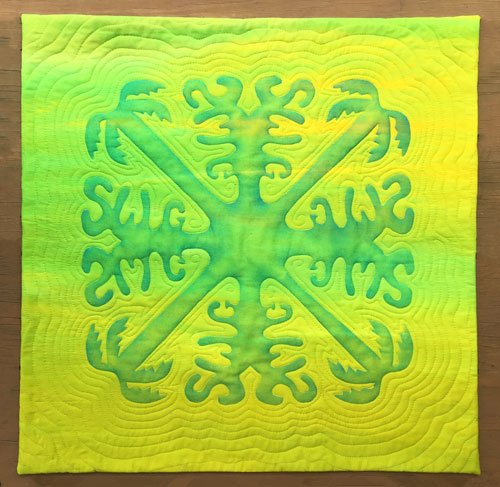
Do you see the “SWG”s? I echo quilted this 25” wall quilt by machine and faced the edge.

Our Hawaiian cruise adventure will take place in January 2019. That may sound like a long way off, but this sailing on NCL’s American Pride will sell out.  We need to release cabins back to Norwegian if they are not spoken for soon so if you’ve been contemplating joining us, please let us know. Simply click here for a printable version of the cruise flyer!”

And now – on with this week’s post:

In my last post I shared a simple technique for finishing a quilt without the need for a traditional binding. There is another option for a “binding-less” finish and it’s called a facing. I’ve seen many faced quilts while judging quilt shows and, as with the turned quilts we talked about last week, the corners are always the problem area. They tend to be lumpy, and they’re often messy looking along the edge and the back.

BUT THEY DON’T NEED TO BE!

This really isn’t any harder than attaching a binding:

• Begin by squaring up your quilted quilt 1″ longer in each direction than you’d like it to finish, because the facing requires a 1/2″ turn under allowance all the way around (a binding fits over the cut edge of the quilt and thus no length is lost, but a facing does require this extra inch, so remember to allow for it).

•  Choose a facing fabric that is similar in color and value to the fabric along the outer edge of your quilt.  Measure the width and length of your squared quilt. Substract 4” from each measurement and cut (2) 1 ½” strips at both measurements (ie. a quilt measuring 30” x 40” would need 2 strips cut 26” and 2 strips cut 36”). Cut (4) 5″ squares also.

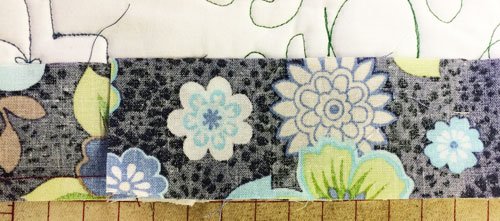
• Press the 5” squares in half diagonally, right side out. Trim about 1” from one corner as in the picture below.

• Place a folded square against the right side of the quilt, in one corner, raw edges even, with the trimmed corner facing up.
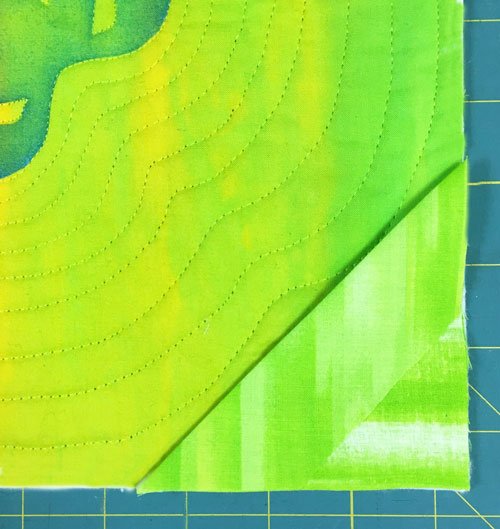
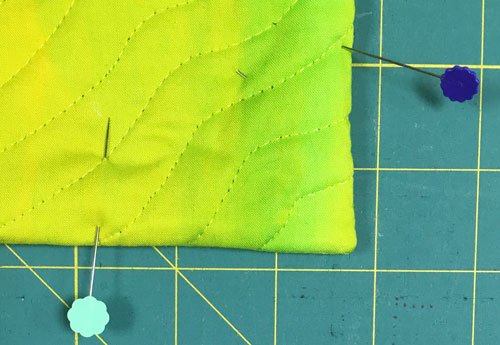
• Place all 4 corners on in this manner. Then place the long strips, right sides together with the quilt, along all 4 edges, and pin in place. The strips will overlap the corners.

• Using a 1/2″ seam allowance, stitch all 4 sides of the quilt, going off the edge on each end instead of pivoting at the corners (this portion is a repeat of last week’s instructions).
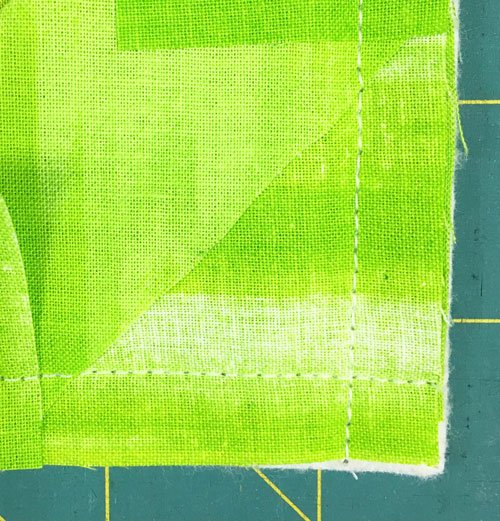
• Using a seam ripper, remove the last 1″ of stitches in both directions (if there is quilting in the seam allowance, that will need to be picked out too).
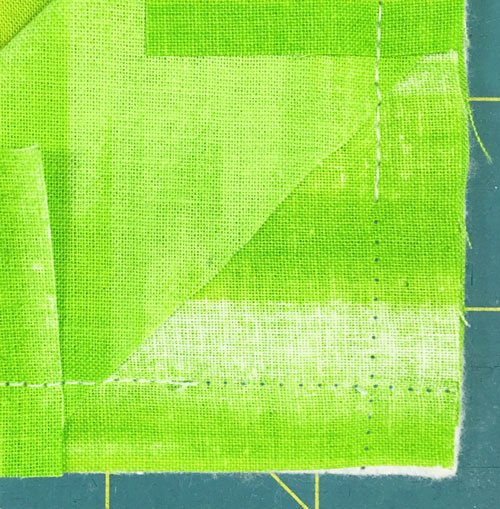
 

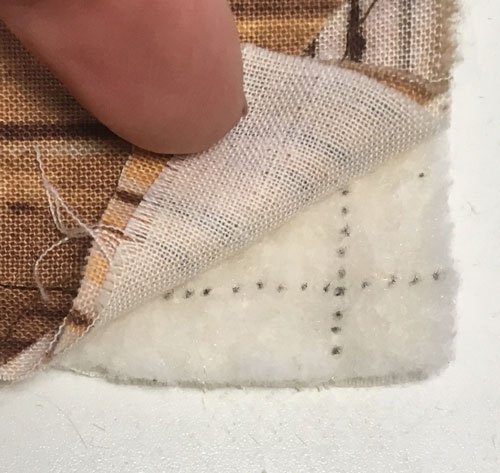
•Pull back the square and the quilt top from the batting in the corner, exposing the previous stitching holes.
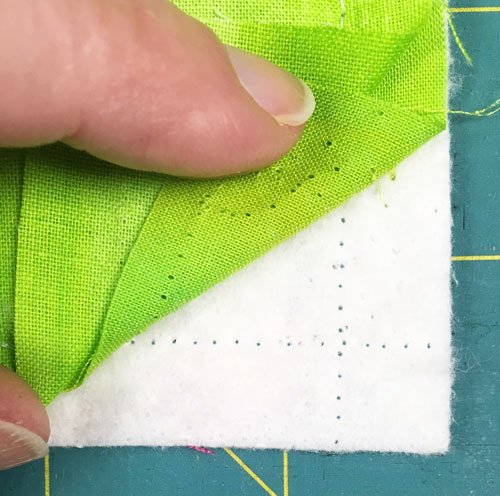
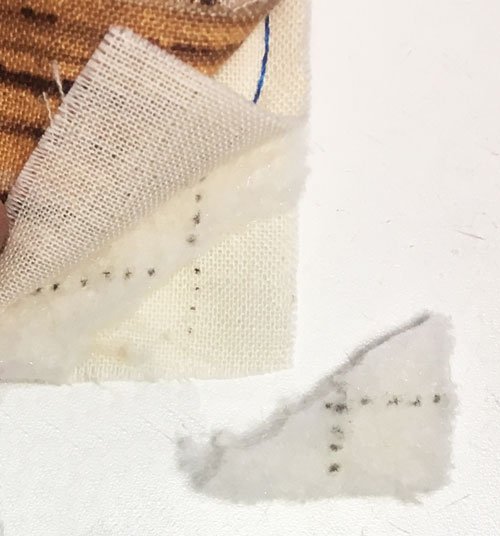
• Trim the batting corner off just inside the crossed stitches. Make sure you trim the batting only!
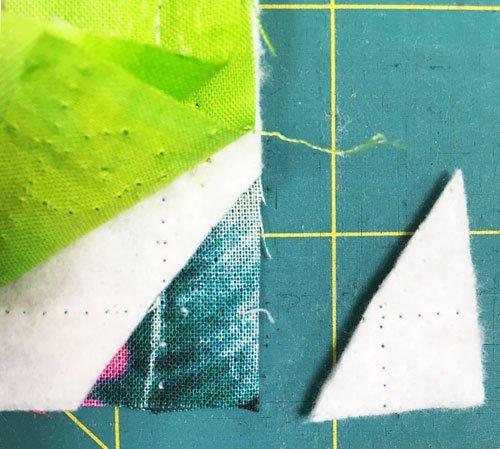
 

• Put the layers back in place and repeat for all 4 corners. Re-stitch the corners, pivoting this time. Trim.
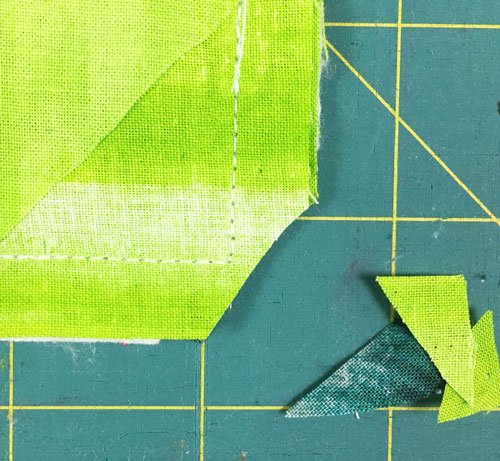
• Turn the quilt over to the back and pull all the side strips out along the edges.

• Beginning at the end of one strip, wrap the strip to the back tightly around the outer edge of the quilt.
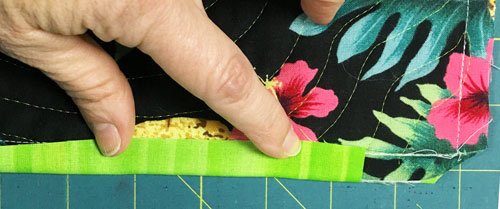
• Then fold the facing to the back of the quilt leaving the seam at the quilts edge. Pin and continue along the entire length.
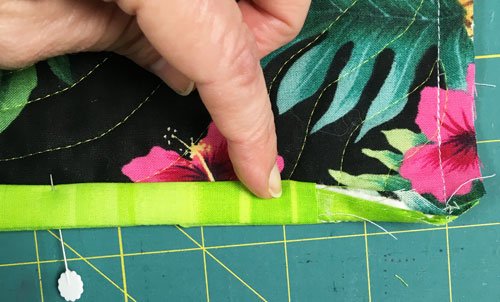
• Repeat for all four sides.

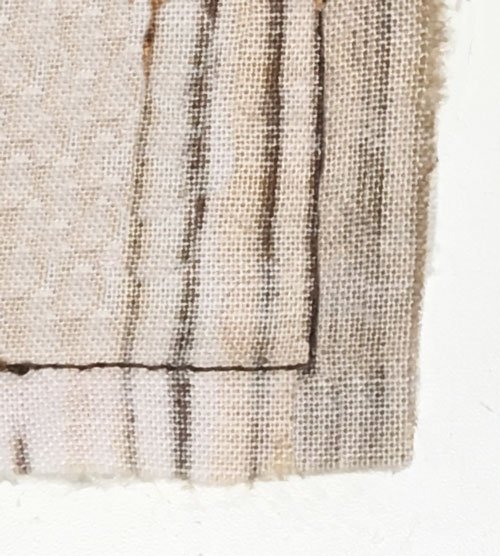
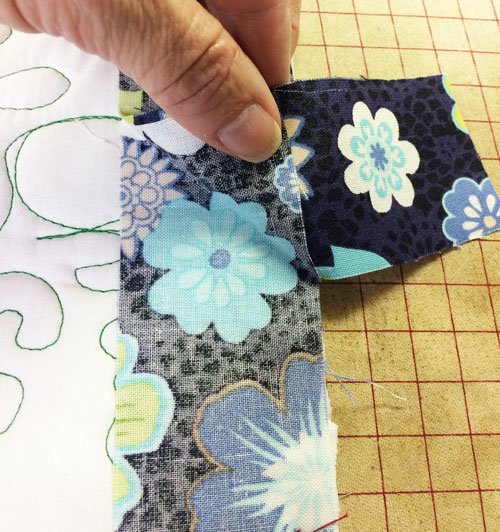
• Turn the corner pieces to the back of the quilt. Push out the corners so they lay flat and sharp. Pin in place.
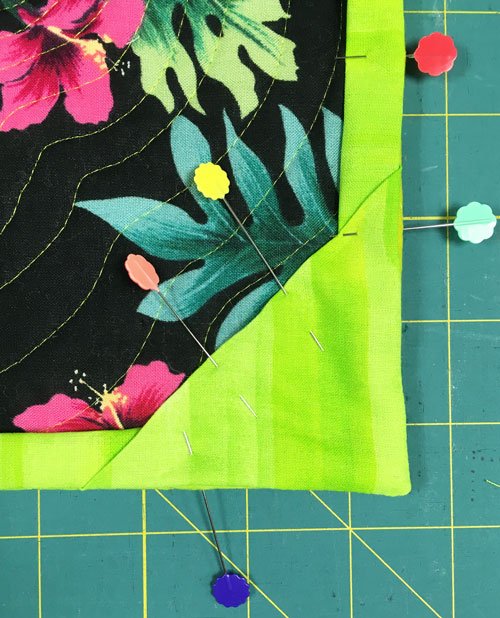
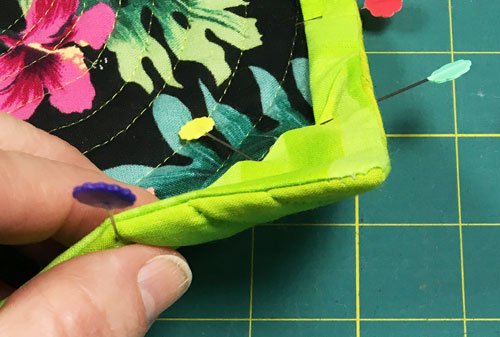
view from the back
view from the edge
view from the front

• Hand-stitch the facing to the back of the quilt.

This technique isn’t for every quilt, but it’s a good one to have in your toolbox when you need it  😀 !

And here’s a quick peek at two other Hawaiian quilts I’ve made. The first includes pineapples and my initials (CLK):
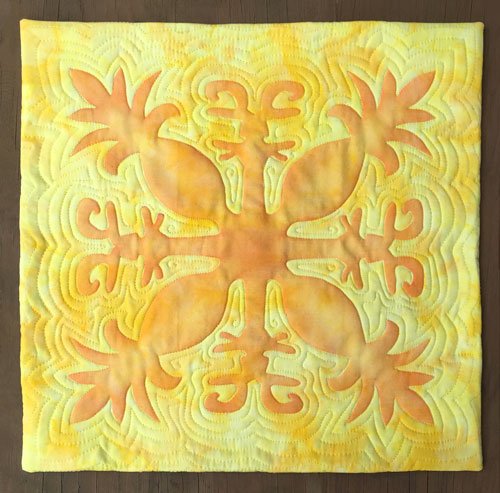
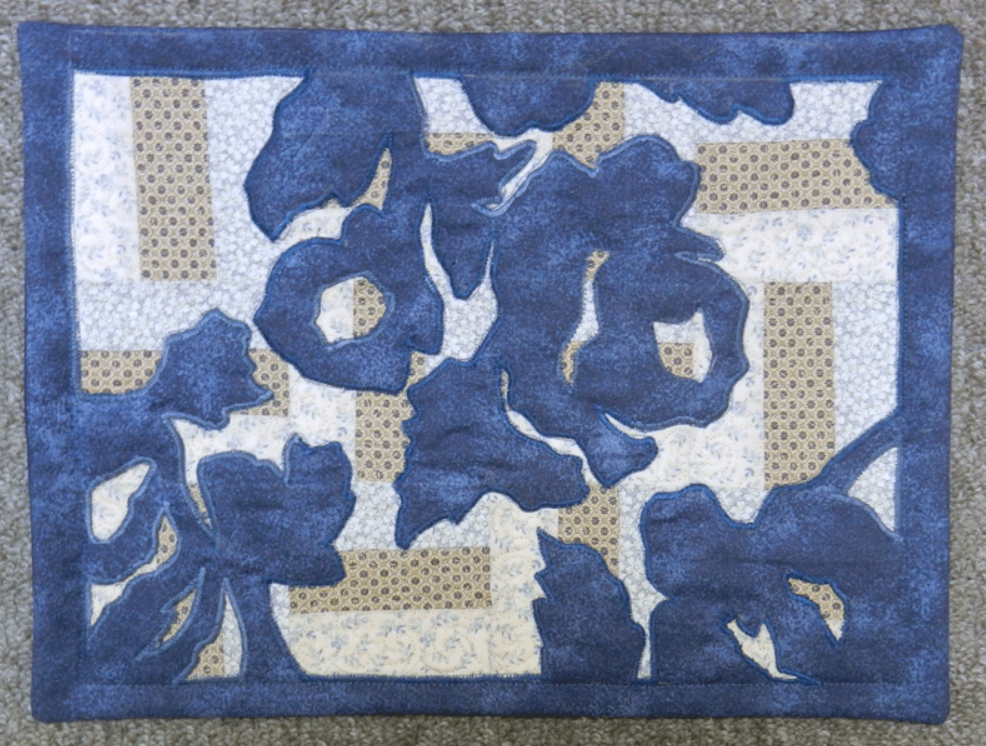
And this one is a small hibiscus flower quilt – just because it’s pretty (no initials or repeated designs):
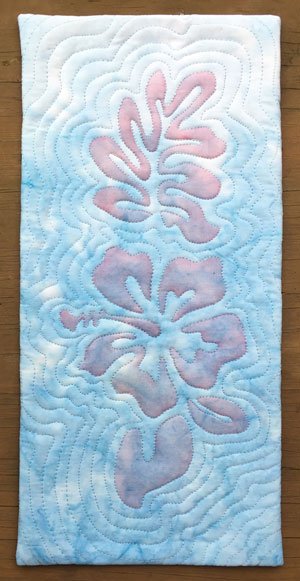
They’re like potato chips – I can’t stop making them!

And I discovered an added plus – it’s quite simple to use one of the corners on the back of the quilt as a label!

I apologize for this post being a bit lengthy, but I’m hoping you found it interesting and worthwhile.

“Binding-less” Flat Corners

March 4, 2018 4 Comments

Currently it is very “trendy” to hang art on the wall without a frame. My daughter-in-law is a talented artist and often hangs her canvases in this manor:

This has become popular with fiber artists too. It is very “in” to hang wall quilts without borders or bindings.  I’ve made a number of wall quilts that I just didn’t think would look great with a binding.

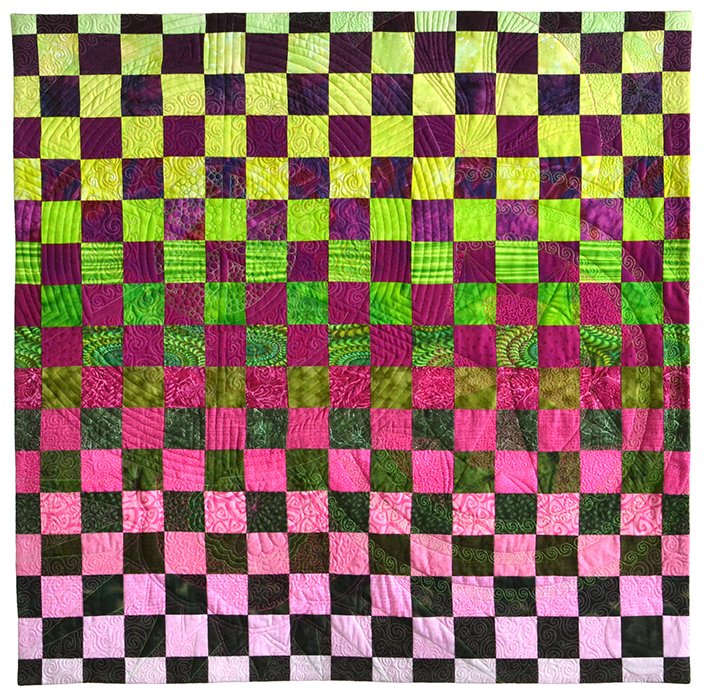
I call this quilt “Interchange” and it is an example of one of my faced quilts. It was made for a challenge entitled “Colorwheel Opposites”. I chose pinks and greens and quilted it with “wheels”.

I love the visual “feeling” that the squares are about to tumble past the outer edge.

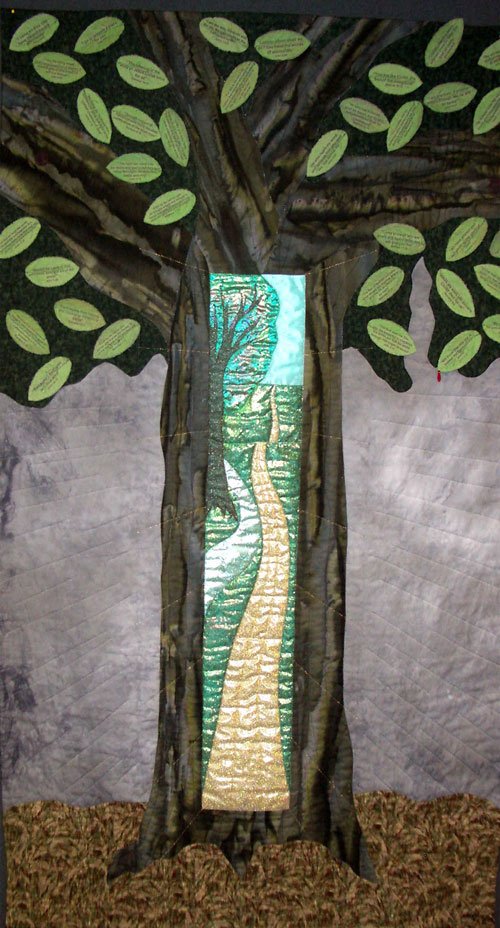
“The Narrow Gate” is another one of my faced quilts. It was made for a different challenge, this one entitled “Portals”, and it’s one of my spiritual journey quilts. The tree depicts the cross, and the portal is a sliver of the heaven we are promised when we are saved by Jesus. The leaves are 3-D and are printed with Scripture verses which tell about this amazing gift. Once again, I thought a binding would be too confining.

So, how does one get this look without a lot of effort? Well, I have two favorite techniques for accomplishing this quite easily. I’ll share the easiest in this week’s post and my favorite way next week.

The simple way is to “turn” small quilts (envelope style: layer batt, top and back; sew all the way around and leave an opening to turn right sides out) instead of binding them.

My least favorite part of turning a quilt is having an unsightly hand-stitched area along the quilt edge where it was turned. In a previous post I shared my favorite technique for eliminating that problem (click here for that post and scroll down about half way through the post for the turning trick).

My second frustration when turning a quilt is lumps at the corners. No matter how much I trim the batt and fabrics, there is always a lump… and worse – I sometimes trim it so close my turning tool pushes through the corner! UGH!

Well – I have a solution for that problem too. Here goes:

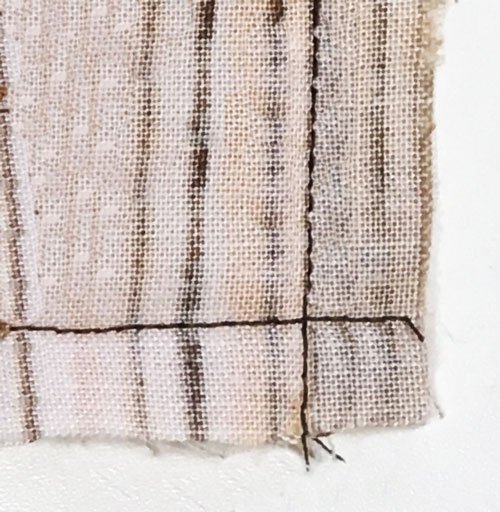
• Stitch all the way around the quilt, using a 1/4″ seam allowance, but don’t  pivot at the corners. Instead, stitch off the ends of each edge as in the picture, yielding crossed seams at the corners:

• Choose a corner and “unstitch” the last inch in both directions. You’ll be able to see the holes where the stitches were when you pull back the fabric:

• Pull the backing fabric out of the way too, and angle cut the batting away just inside the intersection:

• Lay everything back in place and resew the seam, pivoting at the corner this time.

• Trim the corners as usual for turning.

• Repeat for the remaining corners.

• Turn the quilt, right side out, and enjoy the “lumpless” results!

Do you turn your quilts? Do you have problems with lumps? If so, I hope you’ll give this a try, and I’d love to hear your thoughts about the technique.

Please return next week for step-by-step facing instructions. I think you’ll find it quite interesting!

A Sommer Quilt

February 25, 2018 16 Comments

If you’ve been reading my blog for awhile, you know how much I love to teach others how to quilt, especially kids. When my eldest granddaughter, Hanna was 5, she made a quilt for her dolly – and sewed every stitch herself. It took her two hours and when she was done she said “can I make another one?” I love that girl  😀 !

Her little brother wanted to try it, but I made him wait until he was 6. On a visit here from Washington, Willy made a quilt for his bear. He worked on it over the course of 2 weeks and got it done. It’s not really his thing – but he stuck with it.

My great-niece Lily stayed overnight with us when she was 7. She knew her cousins had made quilts and she wanted to try it too.

Sommer (5) is my “nearby” granddaughter, and we care for her and her brother while mommy and daddy are at work every day. Last summer I said to her “Hanna was 5 when she made her first quilt. Would you like to learn how to make a quilt”. She thought for a few seconds and then replied “no thank-you”.

Well, this past Monday she was home from school with a cold. After breakfast she informed me she was ready to make a quilt.

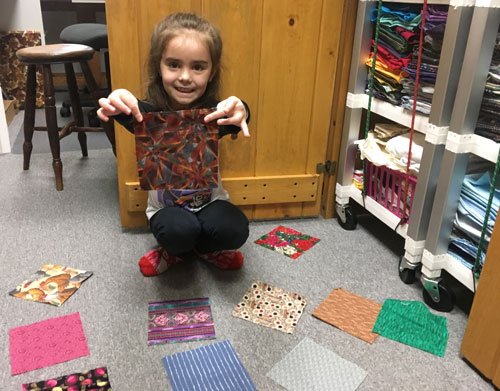
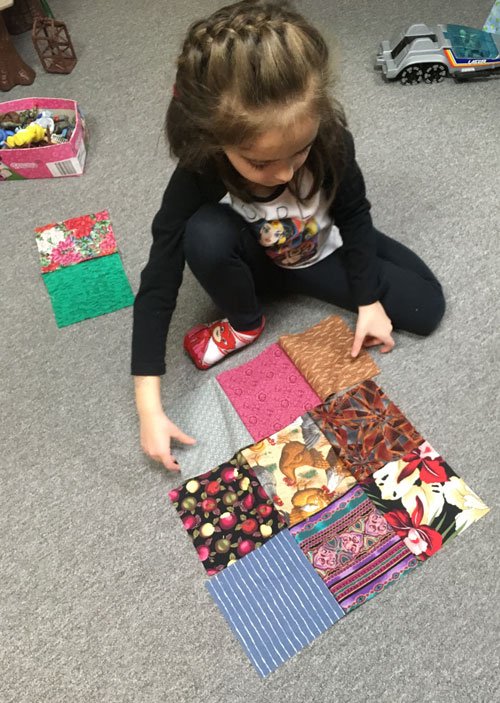
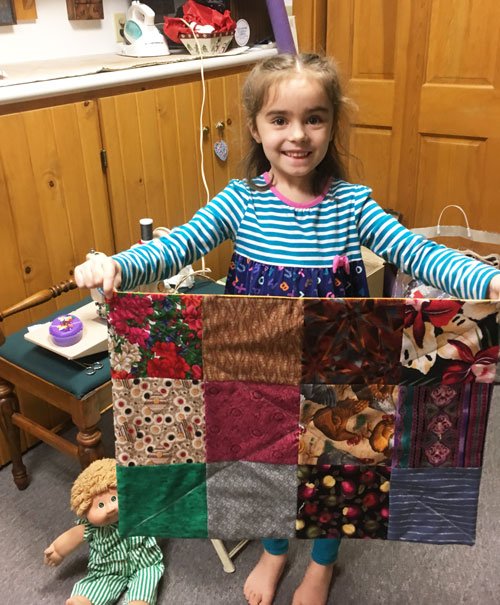
She chose her favorite 12 squares from my charm square box and arranged them on the floor.

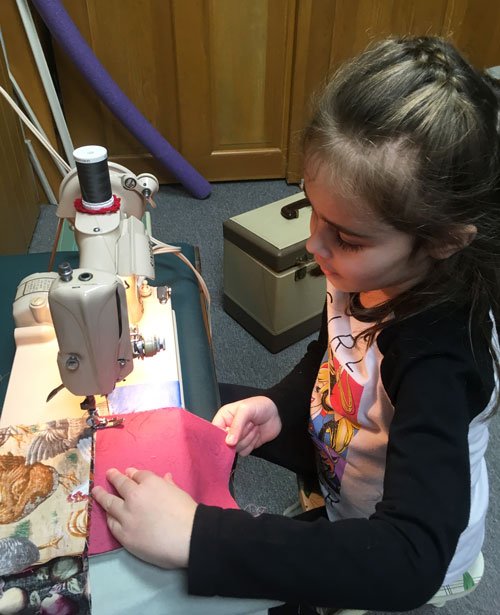
I set up my featherweight on the same bench the other kids used and sat her on a stool. She learned to press the pedal with her foot and quickly caught on to the idea of keeping the fabric edges along the “pad” of painter’s tape.

She kept everything in order on the floor as she sewed.

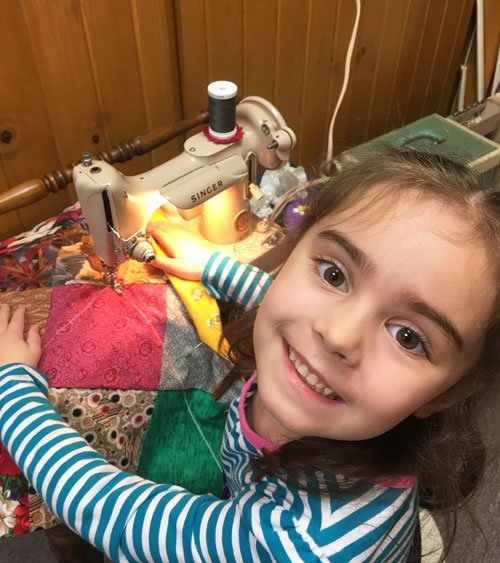
She sewed all the rows together, picked a backing, helped me pin the layers together and sewed all the way around. After turning it right side out, I marked the quilt with a sliver of soap, and she machine quilted it with a big “X”.

I knew she was enjoying herself when she exclaimed “We’re rocking this quilt grandma!”

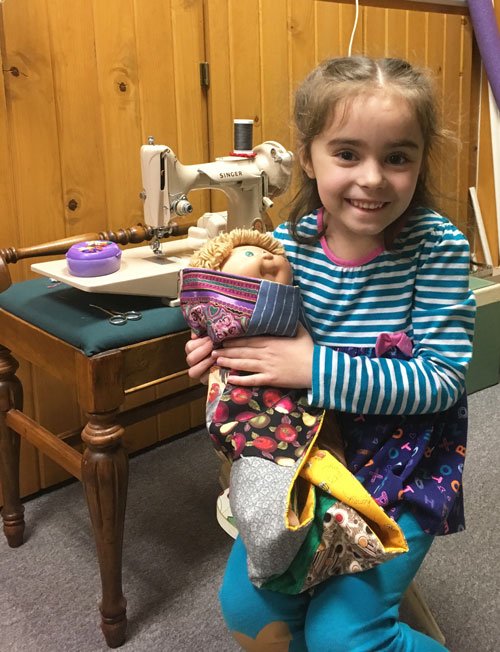
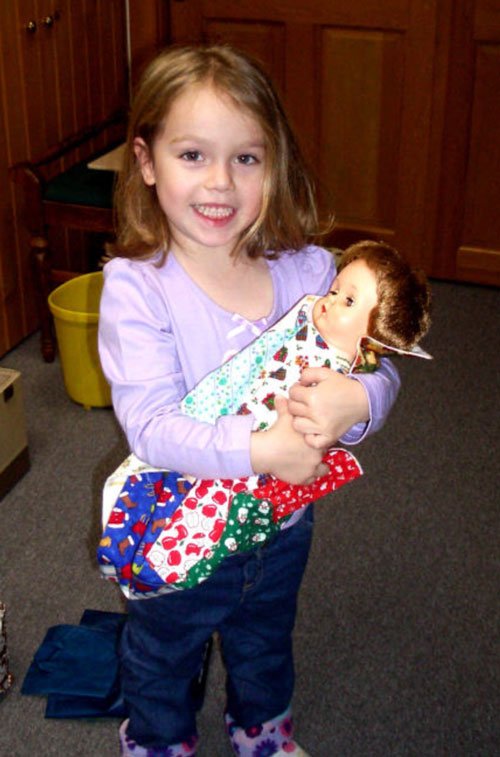
She wrapped it around her daddy’s old Cabbage Patch Kid and gave it a hug.

And here’s one more picture of my proud little quilter.

At this point she reminded me that she won’t be 6 until March, so she made her quilt while she was 5, just like Hanna!

And here’s the other kids and their quilts. I think I’ve got this lesson down pat  🙂 .

To read Hanna’s post click here.
To read Willy’s post click here.
To read Lily’s post click here.

Before I end this week’s post, I need to add one more picture. Yesterday we had a party for Trey’s 3rd birthday. It’s a tradition in our family that I make the kid’s birthday cakes (I do prefer to make quilts – they last longer 🙂 ). So here’s our youngest with his PJ Mask cake.

I wonder when he’ll be ready to make a quilt  😛 !

Rusty Chicken Wire and a Rooster

February 18, 2018 6 Comments

Hawaiian Cruise Update

Before I get to this week’s topic, I’d like to answer a question about Shore Excursions during our upcoming quilter’s cruise to Hawaii in January of 2019.

The price of our adventure includes a group excursion in each port on the cruise. Our number one priority in choosing these excursions is to make sure we see everything Hawaii has to offer! We plan to also include some stops especially of interest to quilters, when it won’t interfere with the exploration of our destination. We’ll have all the details available in mid-summer. At that time our travelers may choose to opt out of our shore excursion package, if they so desire, and the cost of their trip will be adjusted to reflect this. I hope this is helpful. We still have a few cabins available and you can read all the details, and sign up, by clicking on:

And now – a topic to crow about  😀 !

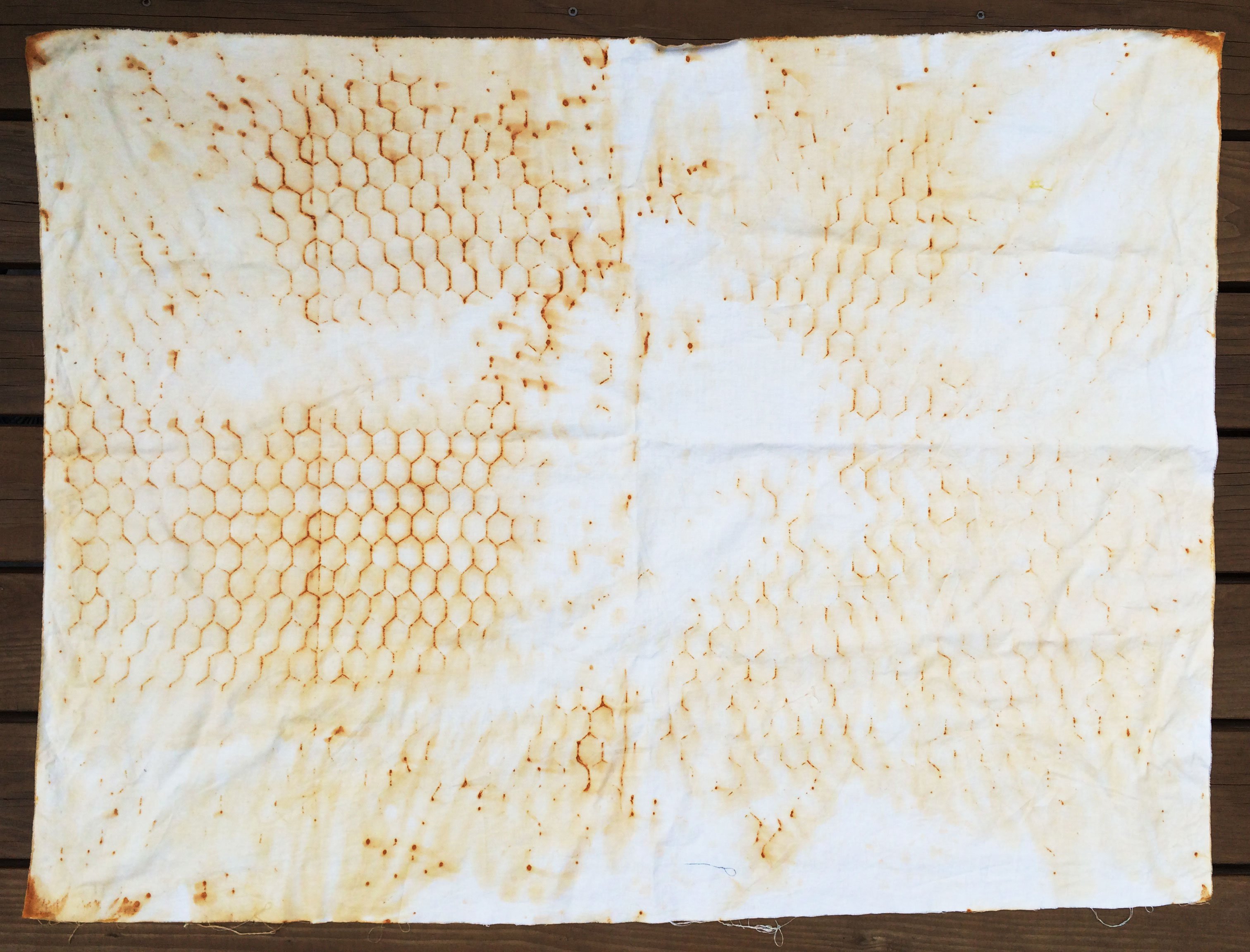
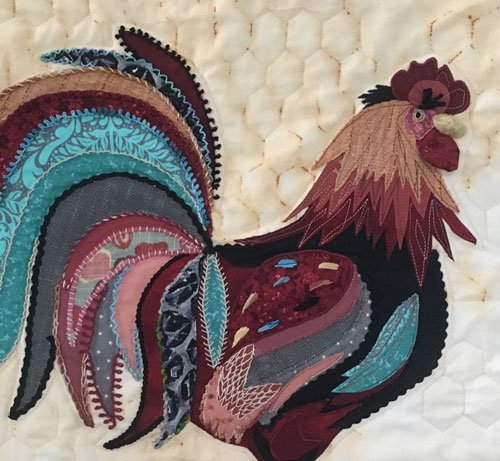
Last Fall Sue Schlobohm, a student in my Open Lab class, told me she wanted to make a quilt for a challenge at a local craft/quilt shop. She had purchased the packet of fabrics to be used in the challenge and had decided she wanted to make a quilted portrait of a well embellished rooster. To accomplish this she was wondering if I knew of anywhere to get “chicken wire” fabric for the background. Well, you might remember that in the Summer of 2016 I tried my hand at rust dyeing and created a piece of fabric with a very rusty hunk of chicken wire fencing (to read all about it click here).

I had folded 1 yard of fabric around a “1/2 yard” piece of fencing (that’s why the side on the right is a lighter version of the one on the left).

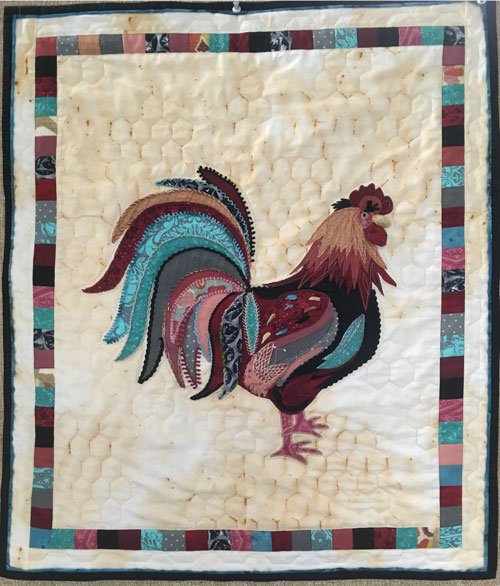
I immediately felt the need to share half of the fabric with Sue :-). And – Wow – did she put it to good use! Here is her wonderful quilt.

Sue makes decorator pillows professionally and deals with a lot of home dec fabric. Some of those scraps found their way into this regal rooster’s tail, along with her lovely hand stitching.

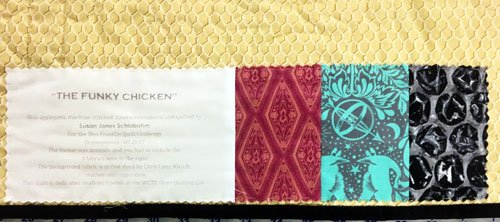
Her label is well done also:

The words in the picture are a bit difficult to read, so here’s what it says:

“The Funky Chicken

Was appliquéd, machine stitched, hand embroidered and quilted by Susan Jones Schlobohm for the Ben Franklin Quilt Challenge, Oconomowoc, WI – 2017

The theme was animals, and you had to include the 3 fabrics seen to the right. The background fabric was rust dyed by Chris Lynn Kirsch, teacher and inspiration.

The quilt is dedicated to all my friends at the WCTC Open Quilting Lab”

I was thrilled to be acknowledged by this talented lady and I hope all of her friends in Open Lab read that last part  😀 !

Thank you Sue, for letting me share the story of your delightful quilt. Congratulations on a job well done!

***********************

And, since this post spoke of both a rooster and Hawaii, I thought you might find this interesting:

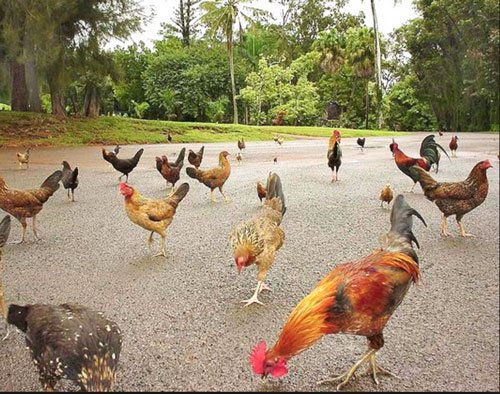
A few years ago Mike and I vacationed in Hawaii, on the island of Kauai, and we were fascinated by the plethora of wild chickens and roosters running all over the island. Here’s the story:

“Most locals agree that wild chickens proliferated after Hurricane Iniki ripped across Kauai in 1992, destroying chicken coops and releasing domesticated hens, as well as roosters being bred for cockfighting. Now these brilliantly feathered fowl inhabit every part of this tropical paradise, crowing at all hours of the day and night to the delight or dismay of tourists and locals alike.”

Glue Basting to Miter a Border

February 11, 2018 2 Comments

Before I get to my topic of the week, I’d like to share a few helpful hints for using a blog such as mine. Some posts (like this one) contain instructions for techniques you may want to save. There are a number of ways to do this:

• When you click on the link to open my blog the first thing you’ll see is my most recent post and, if you scroll down  through it, you’ll find my previous posts. Because I put a lot of pictures in my posts, my site may load slowly on your computer or other device. That’s why I always send you a link to just my most recent post also.

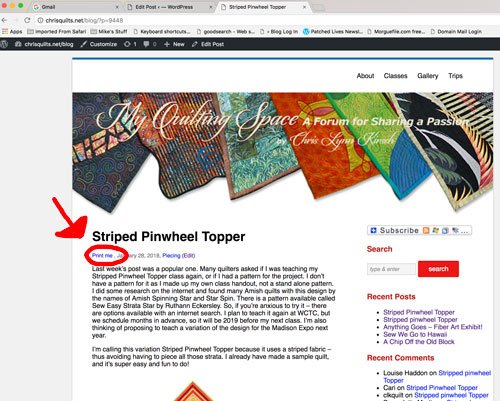
• If you are on my full site and want to open just one of my posts, simply click on the title of that particular post:

The post title is in the red circle.

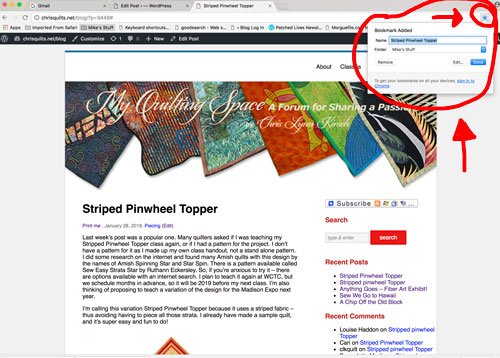
• When you’re in the page that contains only one post, the title will turn black as in the example below. You can “bookmark” that post to save it for future reference. On my computer I can add a bookmark by clicking on the star in the upper right, typing in a name for it and clicking on “done”. This process may be different on your computer, but it should be similar.
Once again – look for the red circle above :-).

• If you’d rather print that post and save a hard copy of the information, click on “print me” under the post title (and be sure you’re connected to a printer):

I hope this was helpful. Now for my topic of the week:

******************************

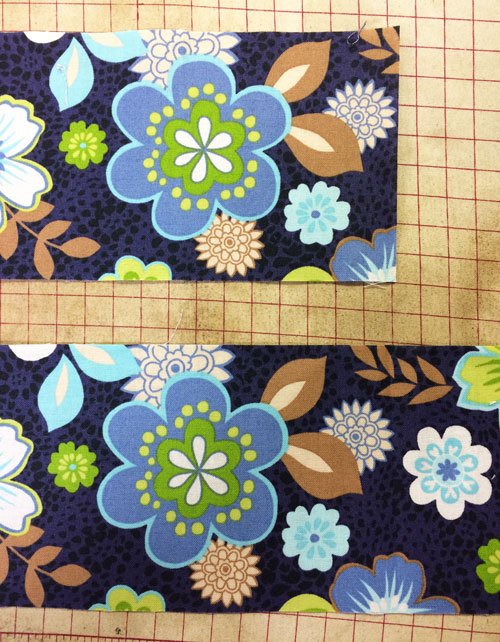
I’ve recently been using Elmer’s School Glue™ to match fabric patterns when sewing strips together. This week we’ll use the same glue technique to miter a border.

• Sew the border strips onto 2 adjacent sides of the quilt top, using a 1/4″ seam allowance, and backstitching 1/4″ from the corner on each strip:

• Lay the vertical strip flat against the ironing surface:

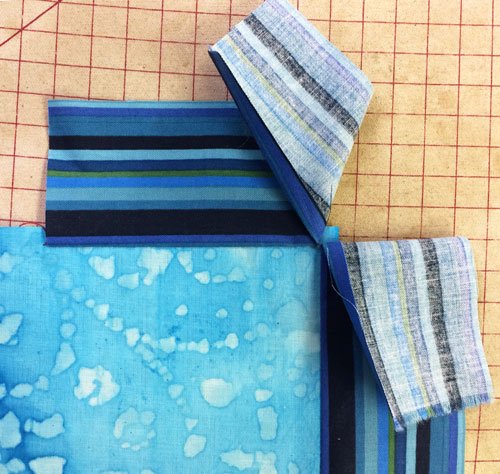
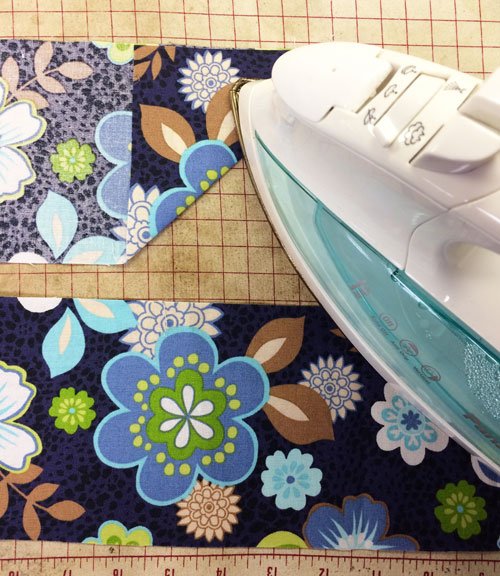
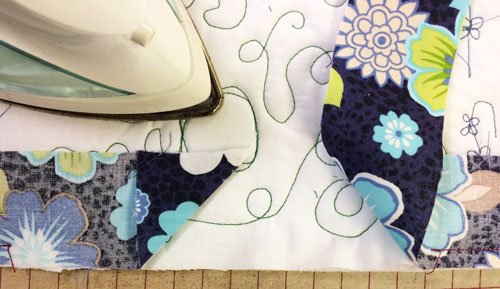
• Fold the end of the horizontal strip under at a 45 degree angle, forming a miter.  If your fabric happens to be a stripe – the miter will be much easier to see  :-). Press:

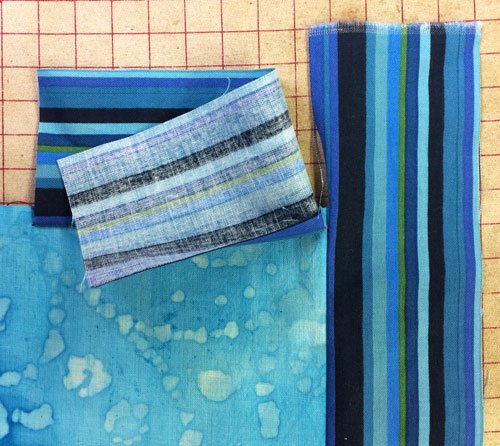
• Pull this newly pressed crease back

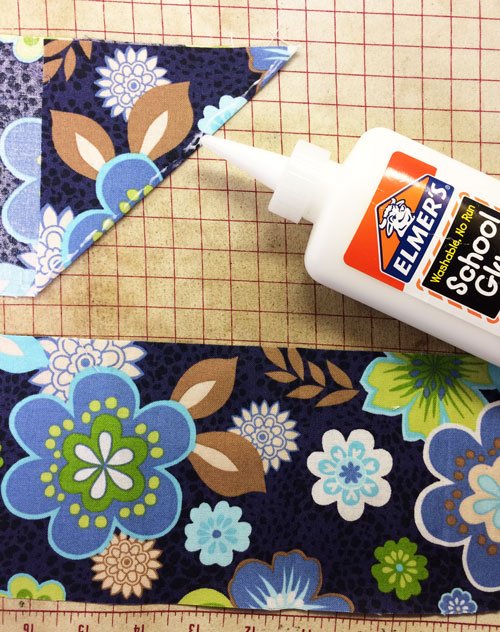
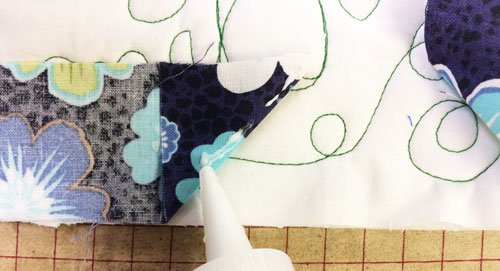
• and squeeze a thin line of glue along the edge of the crease:

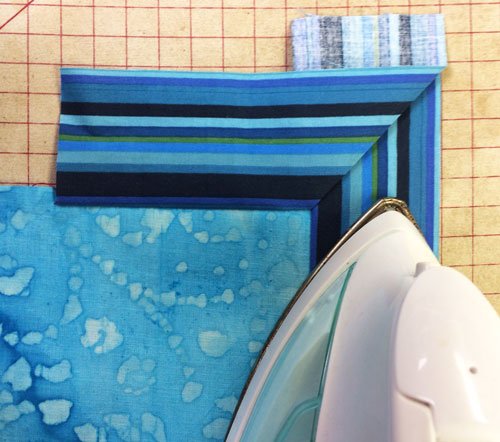
• Lay the glued crease back in place on the vertical strip and press again to dry the glue:

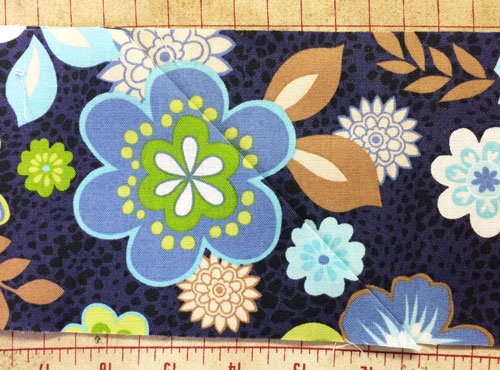
• Once the glue is dry, fold the quilt top in half diagonally to expose the glued crease and stitch in the crease. Trim off the excess strips,  1/4″ from the stitching, and you’re done.

*************************

And one last thing!

Last week I shared information about the Sun Prairie Quilt Show. There will be two other shows in the Southeast Wisconsin area that same weekend:

West Suburban Quilters Guild will be holding their show at the Waukesha Expo Center. For more info go to: http://wsqg.net/quilt-show/

The Crazy Quilters in Mukwonago will also be holding their annual quilt show at the Mukwonago Middle School. For more info go to: http://www.mukwonagocrazyquilters.com/annual-show/

School Glue – a Quilter’s New Best Friend

February 4, 2018 4 Comments

Last week I shared how to match striped fabric strips, using “Elmer’s School Glue”™, with a straight seam. This time I’ll demo matching with a bias/mitered seam. Its the same basic maneuver – glue basting, plus a pressing tip for creating the miter:

• Begin with 2 strips you want to sew together end-to-end, and find a matching pattern on both.

• Turn over one strip and fold back the corner of the end. Press.

• Run a thin line of glue along the pressed crease.

• Lay the “pressed/glued” strip on top of the second strip, glue side down, and carefully match the pattern. Iron in place to dry the glue.

• Then fold the strip you just added on the right, down to expose the inside of the crease and stitch in the crease.

The great thing about using the glue is – if it doesn’t match exactly, even after pressing, simply pull it apart and glue again!

And …

The above technique works great for finishing a “no-end” binding!

• Sew your binding to the quilt, leaving about 8″ open between the beginning and ending tails.

• Fold back the end of the tail on the left at a 45 degree angle and press.

• Run a thin line of glue along this crease.

• Place the tail on the right back evenly on top of the glued crease. Press to dry the glue.

• When the glue is dry, pick up the strip tails, open them to reveal the inside of the crease and stitch in the crease.

Trim the excess tails 1/4″ from the seam and continue sewing the binding to the quilt.

If you prefer to use a double or “French” binding, simply leave yourself a wider opening between the beginning and ending stitches (perhaps 12″), open the strips flat, and connect them as above, folding the strip back in half after it is stitched, and sewing it to the quilt.

I do hope you’ll try this technique. I’ve found it extremely quick and accurate!

An FYI for local quilters –

The Sun Prairie Quilt Show is fast approaching. To enter a quilt in the competition and/or read all about the show click here!

Stripped pinwheel Topper

January 21, 2018 10 Comments

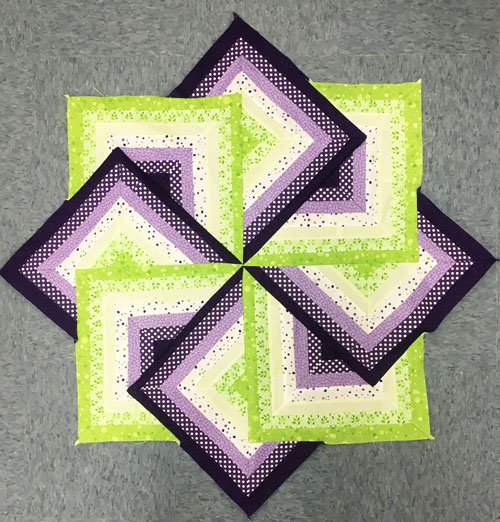
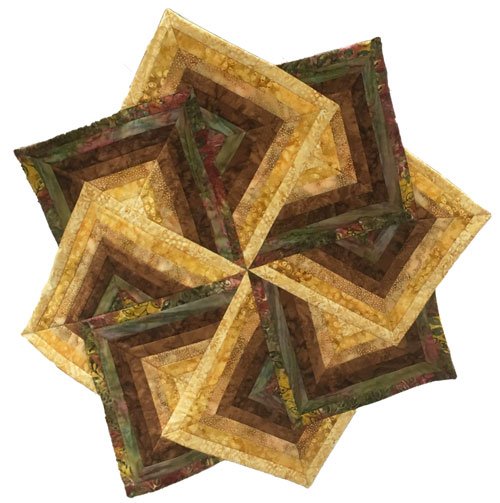
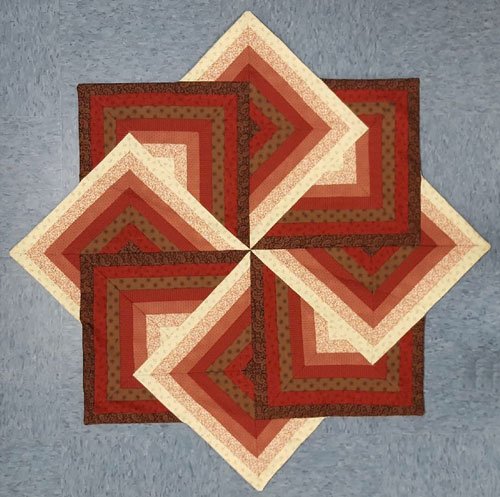
Last semester I taught a pinwheel table topper class at WCTC.

It was the first time I’d taught this class and I’m always a bit anxious about timing, and the possibility of handout errors. It can be hard to gauge how much students can accomplish in the time allotted. I had them cut their fabric strips ahead of time, and there were no problems with the handout, but I really underestimated how long it would take to sew all the strips together. After lunch everyone still had more strip sewing to do and I was getting nervous.

As some of the students finally began to reach the triangle cutting stage it became obvious that the triangle cutting and sewing was actually fun and it was great to see how the fabrics were coming together. But half the class was still sewing away on their strips and I could sympathize with their frustration. Well… by the end of class Carmen had her top done.

A few more were close to done, but – praise the Lord – everyone had at least 1/4 of the topper cut out and sewn or pinned together. I felt sure they all knew what they needed to get them finished. On the way home I still felt uneasy about the class – I always want it to be a good experience for everyone.

That night I received an email from an address I didn’t recognize that began: “It’s all your fault!!!”. I gulped, but I knew it was not spam because the rest of the message (readable prior to opening) said “I came home and the one we made in class”. That’s all I could see, but I felt I had to read the rest of the email and when I opened it this was the entire statement:

“I came home and the one we made in  class was too large for our table so I shrunk it. Thanks for the technique. Deb”

She made a second, smaller one that same day! And here’s the picture  🙂 :

Wow! What an overachiever. I responded with how impressed I was, and congratulations. When I asked Deb how she did it and if I could include it in my blog she wrote: “Sure. I cut 3-1″ strips. I’m a goof ball who went home and made more. ? Turned out!!  Thanks again!”

This made my evening. I then wrote to the other students and asked them to send me pictures if/when they got their tops done. Here’s what I received back!

Alice
Mary
Jacque
Mary Ann
Jean
Jane
Barb

Great job ladies. I’m so impressed with the results! They’re all lovely and it’s fun to see them in so many different colorways.

Anything Goes – Fiber Art Exhibit!

January 14, 2018 4 Comments

Before I get to today’s topic I’d like to apologize for last week’s email link error which affected quite a few of you. If you would like information on our Sew We Go cruise to Hawaii in January 2019 – please click on this link: https://www.chrisquilts.net/trips/


****************

And now for my “Topic of the Week”:

I’m very pleased to announce that Threadbenders, a new fiber art group I belong to, has an exhibit of challenge quilts hanging at Sew Much More in Waukesha, Wisconsin!

(formerly known as Frank’s Sewing Center – 2140 W Saint Paul Avenue).

I belong to two art quilt groups and in 2017 they both held Anything Goes Round Robin challenges. I’ve participated in these before and it’s a great learning experience. In essence each member puts something in a bag, passes it to someone else and does anything they want to what’s inside the new bag they get. After 4 or 5 rounds the originator gets their bag back and the only rule is “you can’t be upset over what you get back”. The originator then is encouraged to finish theirs.

Many participants in our Threadbenders challenge did finish theirs and the results are quite interesting. Those results are what is hanging at Sew Much More (here are two pics of the exhibit, but they really are much more interesting “in the cloth”).

We took pictures each step of the way and have posted them on our blog. To see all of the finished quilts and all of the step-by-step pictures go to: https://threadbendersblog.wordpress.com/2016/11/27/threadbenders-blog/

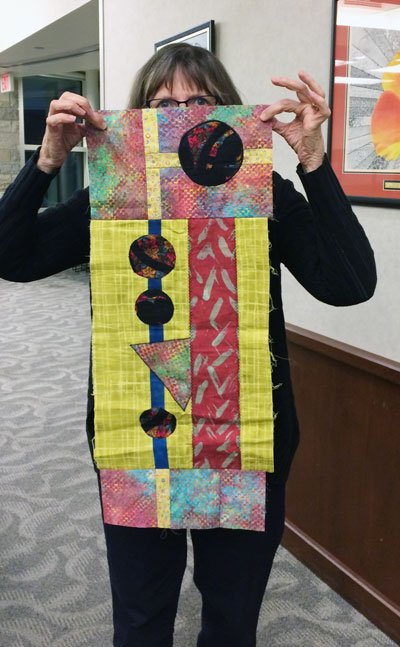
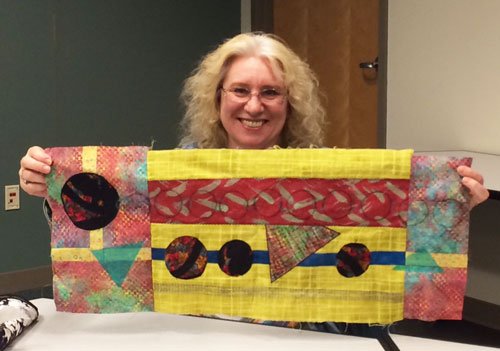
Here are the pictures of my challenge piece’s transformation. Laura got my bag first. It contained an unfinished class sample from my silhouette appliqué workshop.

Laura – round 1
Connie – round 2
Sonja – round 3
Brenda – round 4

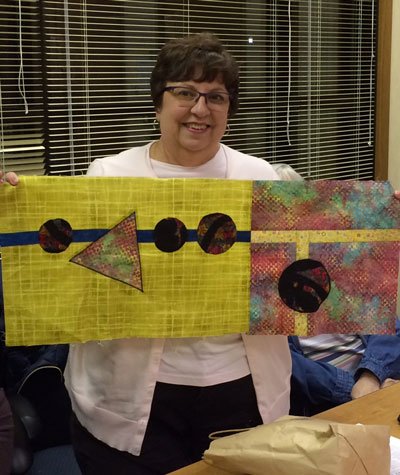
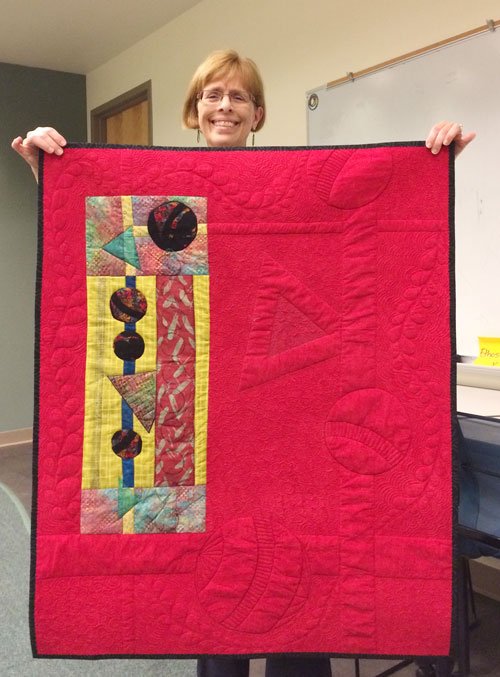
I was a little befuddled about what to do with what I got back. After staring at it for a while I decided it might be fun to use it as the focal point of a “Modern Quilt”, using the shapes in the challenge piece to inspire my quilting designs. I was pleased with the results (red – I know – who would have thought it???).

If you didn’t link to the Threadbender’s blog above, to see all of the Anything Goes quilts, please do so now at:  https://threadbendersblog.wordpress.com/2016/11/27/threadbenders-blog/

And to see the finished projects – go to Sew Much More! It’s a great store and you won’t be disappointed!

  • « Go to Previous Page
  • Page 1
  • Interim pages omitted …
  • Page 44
  • Page 45
  • Page 46
  • Page 47
  • Page 48
  • Interim pages omitted …
  • Page 77
  • Go to Next Page »

Primary Sidebar

Archives

Recent Posts

  • Quilting in Bloomington ~ Part 2
  • The Indiana Heritage Quilt Show ~ 2026
  • Bird’s Eye View
  • The Birds
  • Sew Much Creativity

Recent Comments

  • judy raddatz on Quilting in Bloomington ~ Part 2
  • Kathy Wuhrmann on The Indiana Heritage Quilt Show ~ 2026
  • Doris Ast on The Indiana Heritage Quilt Show ~ 2026
  • judy raddatz on The Indiana Heritage Quilt Show ~ 2026
  • Jeanette Bussard on The Indiana Heritage Quilt Show ~ 2026

Categories

Footer

My Guide

Whatever you do, do your work heartily, as for the Lord rather than for men.

—  Colossians 3:23

Contact Chris!

  • Home
  • About
  • Gallery
  • Classes
  • Trips
  • Books
  • Blog
  • Contact
  • Sign Up For My Blog

Copyright © 2026 · Chris Quilts · Website by Adunate · Privacy Policy