A few months ago I got a new computer and thus I needed to adjust to a new version of MS Word. In my second book, “Snuggle and Learn Quilts for Kids”, I use Word to create my word patterns. These patterns need to be a mirror image of the word so that they can be stitched using my Repliqué technique (which reverses the pattern). I know many of you have this book or have seen my demonstration on how to make these patterns. Here’s the problem: MS Word no longer allows us to type a word in Word Art and then stretch it to fit the page, nor can we use “flip horizontal” to reverse the image. Grrrrrrr.
So I decided I needed to try to find an alternative – and I have :-)! If you have my book, please copy and paste these new directions into a blank document, print them and place them in your book for future use.
To Create a Word Pattern:
1. In the Layout menu select “Orientation” and check “Landscape”.
2. In the “Document Elements” menu select “Word Art” (the tipped “A”); select the simple outlined letter (mine is in the upper left).


A Text Box should appear. Type the word or name you want in the box. If you attempt to type and it doesn’t work, highlight “Your Text Here” first and then retype the word.
3. Make sure your Name/Word is still highlighted and select “Effects” (the fuzzy “A”); select  “Transform” and under the “Warp” menu cursor over the different options and click on the one that reads “square”.
4. You may now stretch (warp) your word by “left clicking and holding down” the “handle” on the lower right corner of the text box then dragging it to the desired size for your pattern.

To Reverse the Image:
1. Highlight the Name/Word once again (it may shrink back to it’s original size, don’t worry – just proceed).
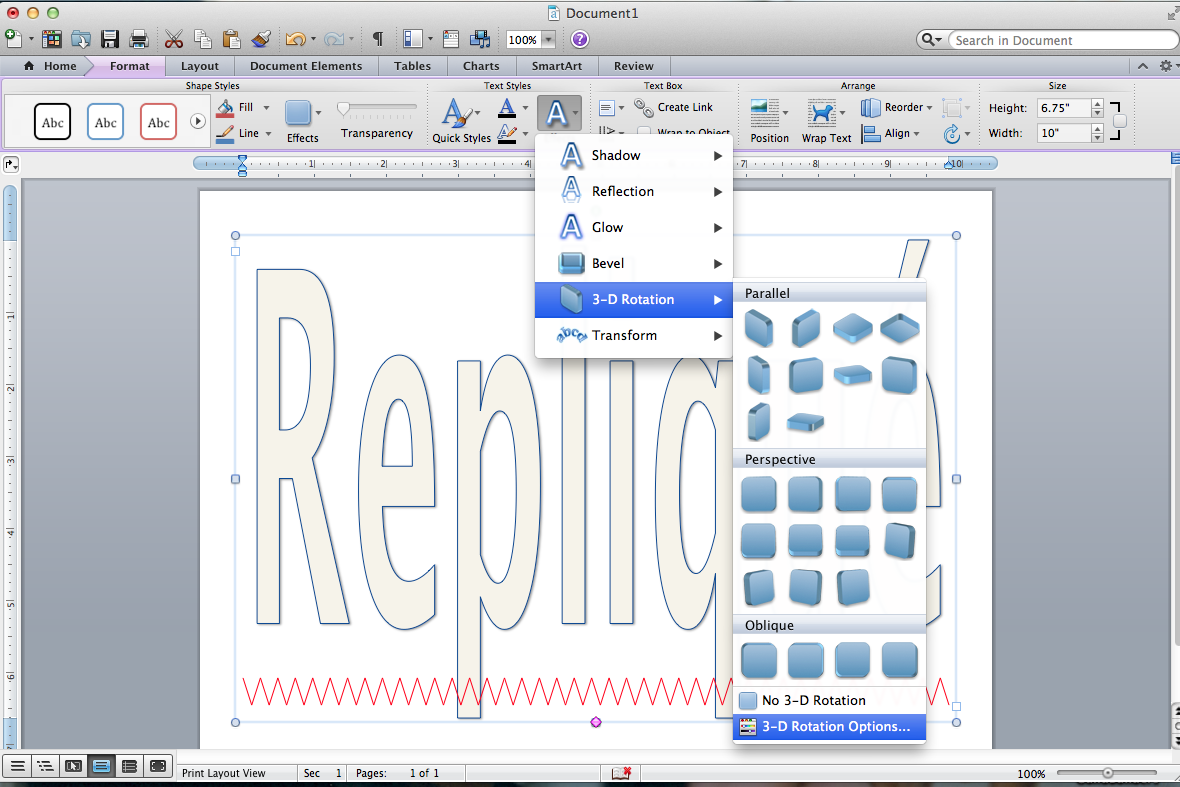
2. Select “Effects” once again; select “3-D Rotation”; select “3-D Rotation Options” at the bottom of the menu box.
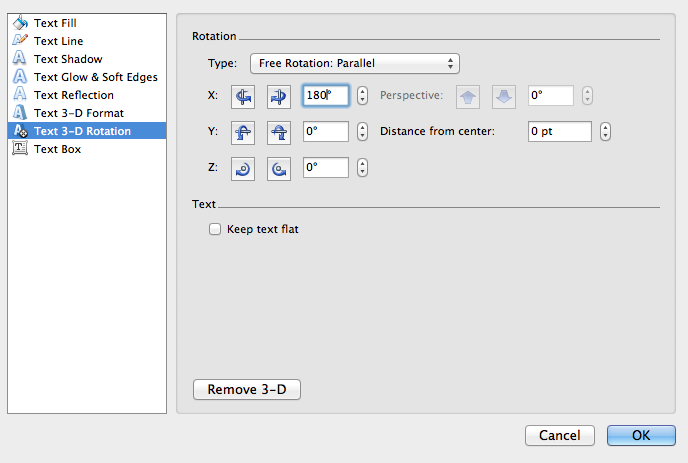
3. In the new menu type “180” in the “X” box and click “ok”.
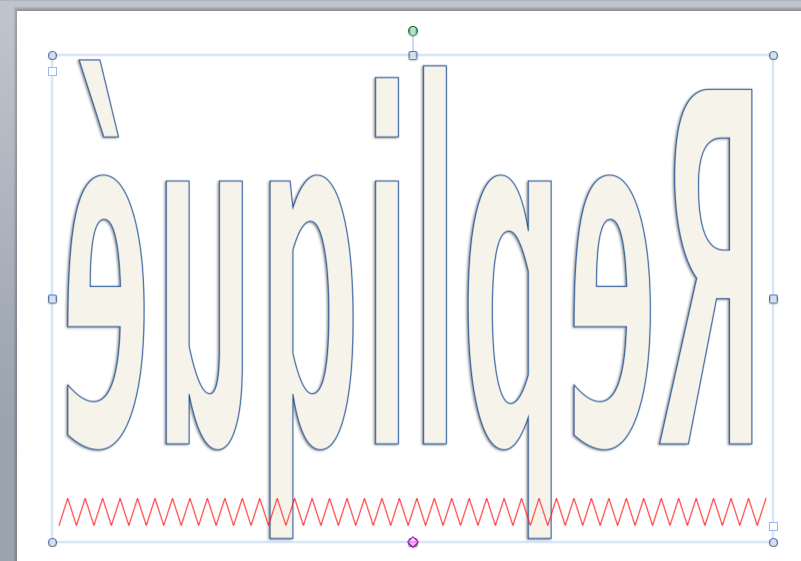
Your Name/Word should now be the desired size, reversed and ready to print!
I hope this was helpful. These patterns may also be used for fusible web appliqué, but I would recommend Repliqué :-)!
Upcoming Classes
I have a few one day workshops open this Summer. If you are available I hope you’ll consider signing up.
Logs and Chains – Friday, 8/9, 9-2:30
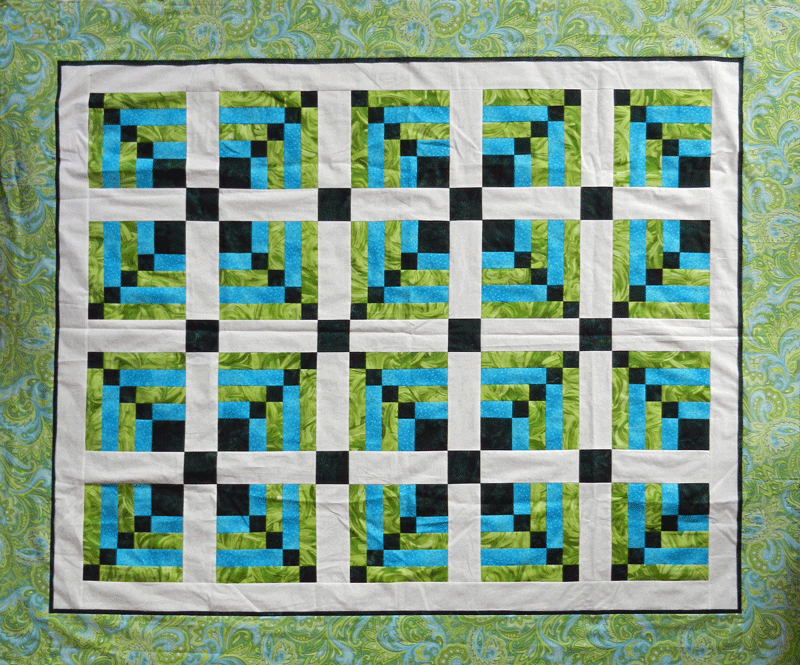
Click here for all the information: http://www.wctc.edu/class-
Compass Capers – Friday, 7/12, 9-2:30

Click here for all the information: http://www.wctc.edu/class-