• Skip to main content
  • Skip to primary sidebar
  • Skip to footer

  • Home
  • About
  • Gallery
  • Classes
  • Trips
  • Books
  • Blog
  • Contact
  • Sign Up For My Blog

Blog

Quilt Exhibit

December 4, 2011 5 Comments

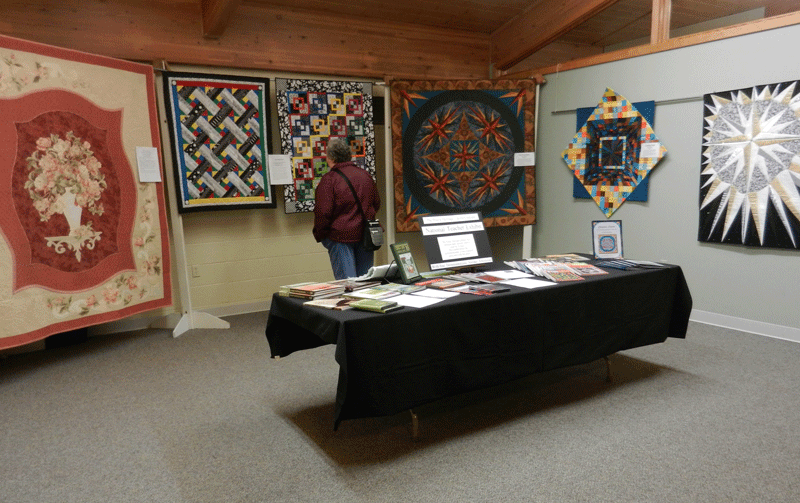
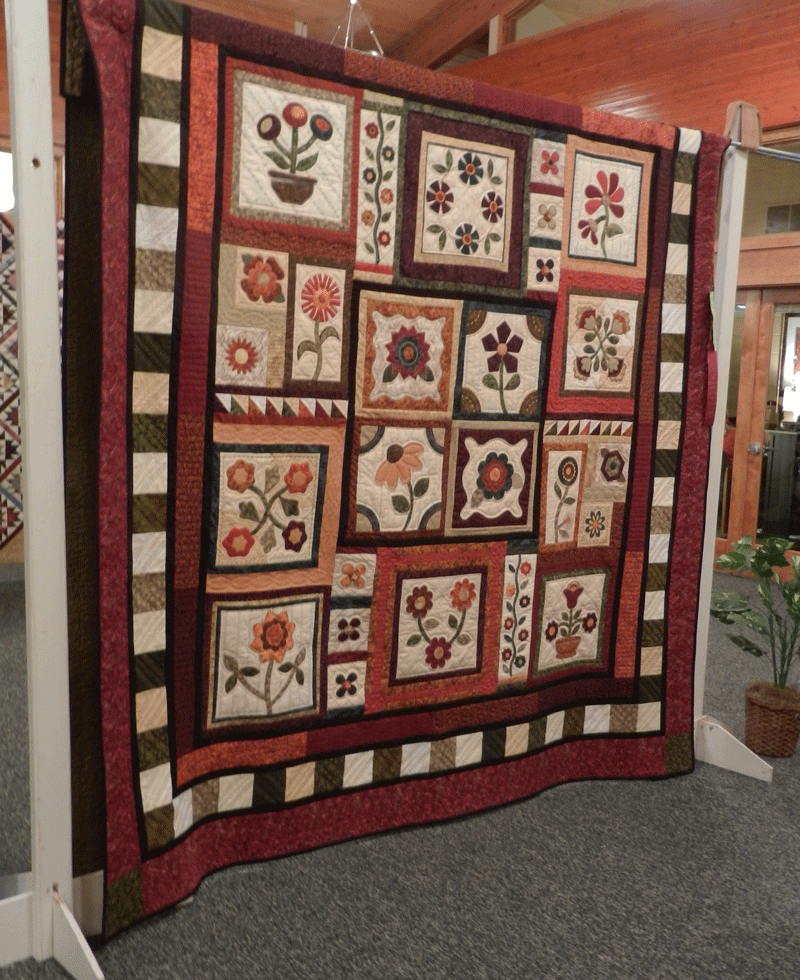
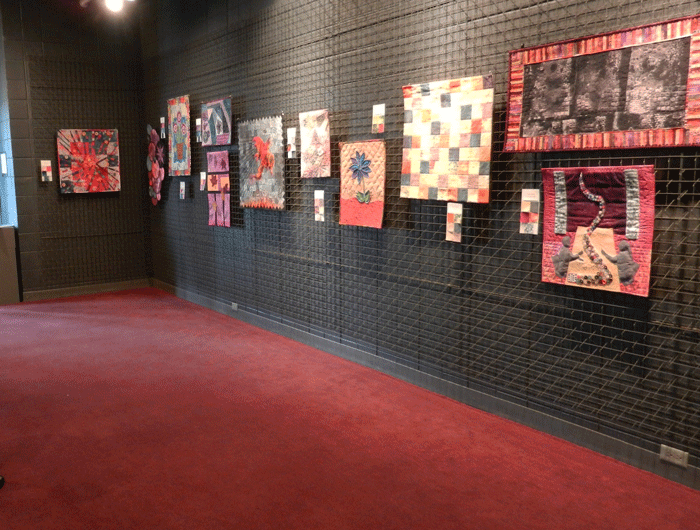
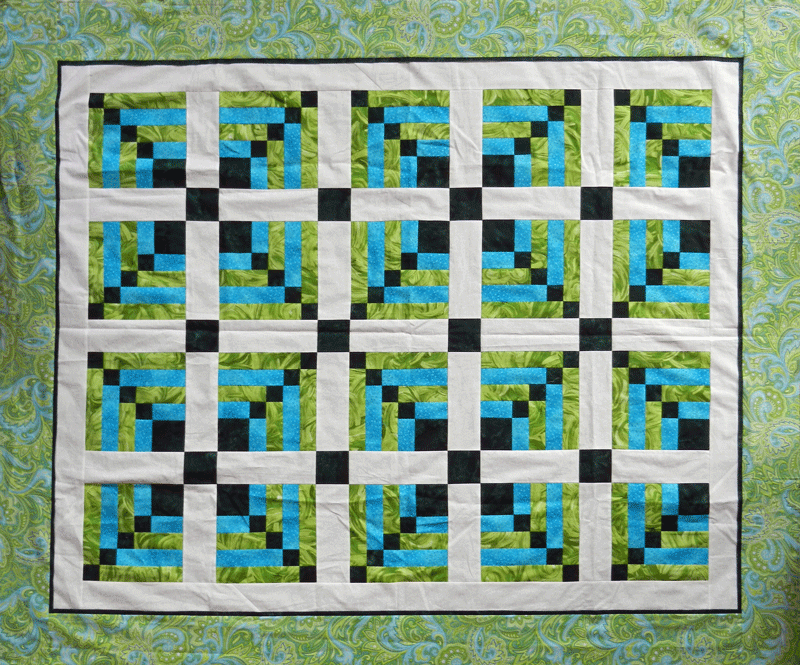
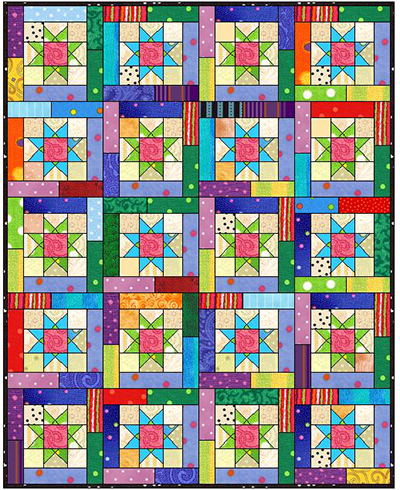
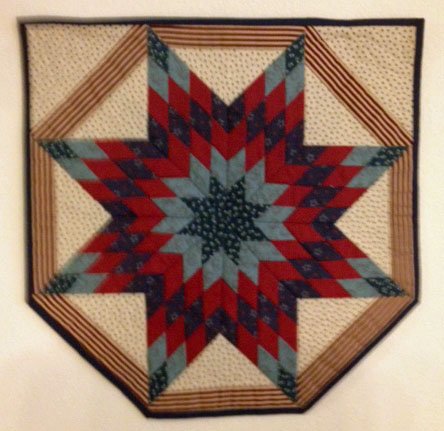
I am very pleased to announce a quilt exhibit entitled “New Quilts From Old Favorites” is currently hanging at the Wisconsin Historical Museum on the Capitol Square in Madison, WI. These quilts are innovative interpretations of a number of traditional blocks. Some of the quilts were made in collaboration with my dear friends Sharon Rotz and Wendy Rieves and others are my own. Samples of the traditional pattern of each are also included in the display.

Welcoming the Son Into Our Garden by Wendy Rieves and Chris Lynn Kirsch
Tumbles the Cat by Sharon Rotz and Chris Lynn Kirsch


This wonderful opportunity came to be because my friend Evelyn Link’s daughter, Gwendolyn Rice, is having the premiere of her play “A Thousand Words” preformed by the Forward Theater Company in Madison. She had the idea of involving a variety of artists in a number of unique exhibits to coincide with the play’s grand opening. I have also been invited to do a lecture at the museum on January 14th. I’m so grateful to have Gwen include me in this exciting collaboration and am including the press release so you can read all about it!

The Art of A Thousand Words –Photos and Fiber Art Inspired by Forward Theater’s World Premiere Play

Madison, WI — Forward Theater Company has partnered with artists throughout Dane County to present a series of art exhibits complementing the world premiere of the play A Thousand Words, by local playwright Gwendolyn Rice. The play, which will be presented in Promenade Hall at the Overture Center, January 19 – February 5, 2012, focuses on many types of art – from the stunning black and white photography of Walker Evans, to crude patchwork quilts from Kansas. It also poignantly explores the relationship between art and commerce, the power of photography, the role of museums in marketing and discovering artists, and the search for authenticity on both personal and artistic levels.

To engage in a broader conversation around these themes, FTC, in close collaboration with David Wells and the Terry Family Foundation, assembled several mixed media exhibits created by local artists, including professional photographers and quilters, and members of the Center for Photography in Madison, the Mad City Quilt Guild, and the Madison Contemporary Fiber Artists.

Author Gwendolyn Rice originally conceived the play A Thousand Words after reading a small article in the newspaper about the discovery of photos in a Key West, Florida, bar. The owner had stumbled upon a treasure trove of books, fishing gear, and personal effects from one of the bar’s most famous patrons – Ernest Hemingway. Among these items were a collection of black and white photos taken by Walker Evans. Rice stated, “This story fascinated me. Unfamiliar with the photographer or his work, I started researching Evans and studying his photos. He eventually became a main character in the play.”

When the play was added to Forward Theater’s third season, the staff began to think about ways to engage additional audiences and artists through visual art. “To me, this project is all about collaboration and being inspired to create something new,” said Jennifer Uphoff Gray, artistic director for Forward Theater Company, and the director of A Thousand Words, a co-production mounted by FTC and Milwaukee Chamber Theatre. “Since the genesis of this play was a set of photographs, and evocative, compelling photos and quilts are explicitly discussed in the play, it seemed natural to involve artisans in those media. It’s been an amazing cross-pollination among artists.”

Rice concurred, saying “It’s really interesting to see how creative people in other fields interpret the images that led me to write A Thousand Words. It is my hope that the play – and the exhibits ‑ will encourage viewers to think about the nature of authenticity, the process of art creation, and the power of words and images.”

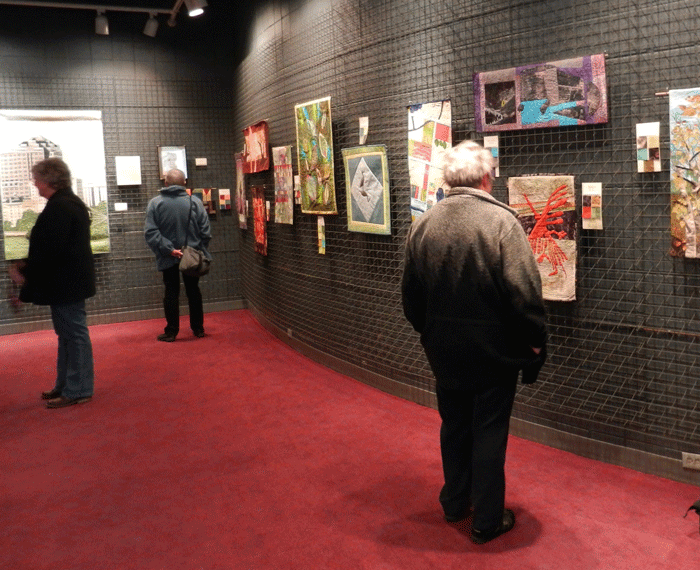
The collection of photos, quilts, embroidery, weaving, and fabric collages will be on display at several galleries in Madison, through March, 2012. In addition to these exhibits, the Wisconsin Historical Society will host two lectures complementing themes in the play, discussing antique and modern quilts. They will also display a group of original works by noted quilt artist and educator Chris Lynn Kirsch.

October 14, 2011

Madison Museum of Contemporary Art Gallery Night, Orange Cone Studios presents Nick Berard’s black and white photos, inspired by the work of Walker Evans.

October 10 – December 1, 2011

Sundance Cinemas Gallery, 430 North Midvale Blvd, in Hilldale Mall
Photos and fiber art, inspired by the work of Walker Evans. Opening reception November 10, 5:30pm – 7:30pm

December 3, 2011 – January 14, 2012

Wisconsin Historical Society,816 State Street

New Quilts from Old Favorites Exhibit – Quilts by Chris Lynn Kirsch that re-imagine traditional patterns such as Mariner’s Compass, Dresden Plate, Sunflower, and Monkey Wrench.

December 8, 2011 – January 25, 2012

UW Madison Continuing Studies Building, 21 North Park St., 7th floor. A collection of black and white photos, inspired by the work of Walker Evans.

December 10, 2011    1:00 – 2:30 pm

Wisconsin Historical Society, 816 State Street – Trends in American Quilting with Curator Leslie Bellais; Why did quilting become so popular in America when it languished inEurope?  Why were there powerful national quilting trends, rather than a myriad of regional styles in the history of American quilting?  These are questions Leslie Bellais, Curator of Costume & Textiles at the Wisconsin Historical Society, will address in her presentation on the history of American quilting from the 1770s to the 1970s, with an emphasis on works of the Depression era.  Her talk will be illustrated with images of quilts from the Society’s collection. Suggested donation of $5 per person. Call 264-6555, email , or visit shop.wisconsinhistory.org to reserve your space.

December 19, 2011 – March 4, 2012

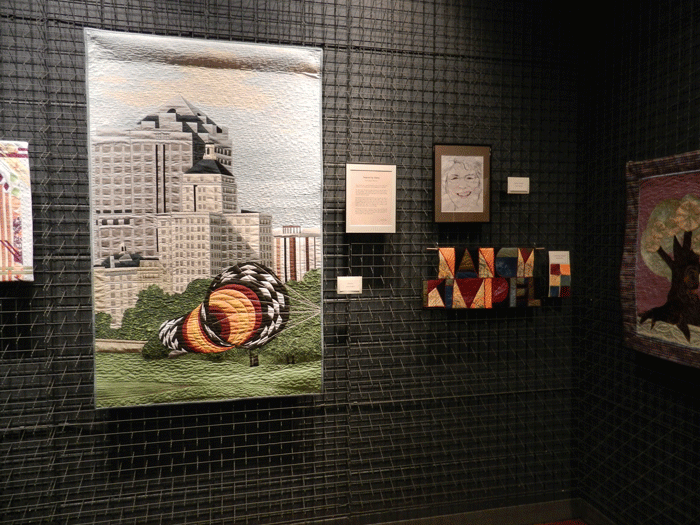
Overture Gallery II, 201 State Street, 2nd floor. Photos and fiber art in the style of Walker Evans, inspired by the play A Thousand Words. Opening reception January 13, 6pm – 8pm

January 13 – March 4, 2012

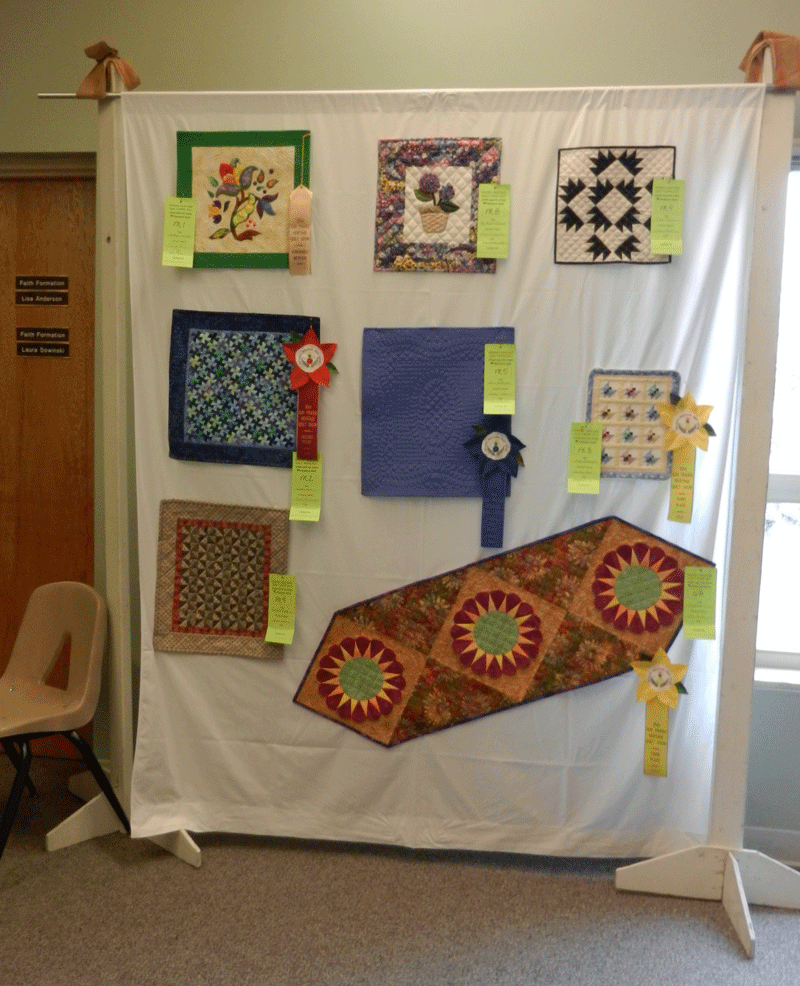
Overture Hall Playhouse Gallery,201 State Street, lower level. Mini quilts by the Mad City Quilt Guild, inspired by the play and the theme “A Picture’s Worth a Thousand Words.” Opening reception January 13, 6pm – 8pm

January 14, 2012       1:00 – 2:30 pm

Wisconsin Historical Society – Contemporary Takes on Classic Patterns: A Talk with Quilter Chris Lynn Kirsch

Quilter, teacher, and author Chris Lynn Kirsch will discuss her original work in the exhibit New Quilts from Old Favorites. Hear Kirsch explain how the love for historic quilting patterns inspired her creation of vibrant, artful, decidedly modern quilts. Local playwright Gwendolyn Rice will also be on-hand to discuss her play A Thousand Words, which features antique quilts and forgotten women fiber artists in its plot. Cost to attend is $10 per person. Register by Monday, January 9th.  Call 264-6555, email , or visit shop.wisconsinhistory.org to reserve your space.

A Thousand Words
For information about the play A Thousand Words, please visit forwardtheater.com. To buy tickets ($35-$37 for adults, $30-$32 for seniors 62+, and $25-$27 for students) please visit overturecenter.com or call (608) 258-4141.

Sponsors
A Thousand Words and the play’s complementary art exhibits are generously sponsored by the Madison Arts Commission (with funds from the Wisconsin Arts Board), Michael Best & Friedrich LLP, the John and Carolyn Peterson Charitable Foundation, Qual Line Fence, and Wegner CPAs & Consultants. Special thanks to David Wells and the Terry Family Foundation.

Forward Theater season sponsors include the American Academy of Cosmetic Dentistry, Distillery Marketing, The Gialamas Company, Isthmus, Wisconsin Public Radio, The Madison Concourse Hotel, and the Pleasant Rowland Great Performance Fund for Theater, a component fund of the Madison Community Foundation. 

About Forward Theater Company

Founded in 2009, the mission of FTC is: to create a home base for Wisconsin theater professionals that will expand the economic and cultural life of the greater Madison area.

Label the Old

October 30, 2011 3 Comments

After enjoying Eileen’s story about her antique quilts last week and having the opportunity to present my antique quilt lecture in Manitowoc, I decided it was a good time to recommend putting labels on our family heirlooms. I’m always encouraging students to label their quilts – and this goes for the vintage ones you own, even if you didn’t make them yourself.

I have some wonderful antique quilts. Some are from my family and others I have collected. No matter how I got them, I always appreciate knowing their story. I truly wish some of them could talk, so I’d know the who, when & where. But alas, very few older quilts are labeled. It’s a shame because it can increase their value immensely. So label them! If you have their entire history – great! If not, put down what you do know, even if it’s just that you own it and how you acquired it.

The easiest way to create the label is to:

1. Cut a piece of freezer paper the size you desire the label to be and draw parallel lines with a Sharpie™ marker,  1/2″ apart,on the dull (paper) side. 

2.Iron the shiny side of the freezer paper onto a piece of muslin (this view is of the lines showing through to the muslin side).

3. Write the label information on the muslin with a fine line fabric marker (I prefer the Micron Pigma™ marker, size 01), using the freezer paper lines as guides to keep your writing straight.

4. Remove the freezer paper, turn under the edges and appliqué the label to the back of the quilt.

Creating labels on a computer and printing them onto colorfast printer fabric is another good option.

What information should you include? Who made it. When. Where. For whom. Who owns it. When. Where. Anything else you’d like someone to know when you’re no longer around to tell them.

Remember to label your current quilts too. They may not be around 100 years from now, but if they are, someone may want to know about you :-)!

Let’s Face It!

October 10, 2011 7 Comments

My latest quilt has a very odd outer edge that I wanted to face, rather than bind. After a bit of noodling I came up with a way that worked great! It would work for any quilt with a curved or unusual outer edge (scallops, double wedding ring, grandmother’s flower garden, etc.). I can’t show the front of the quilt because I plan on entering it in a major show and don’t want to have it shown publically yet. So here’s the step by steps along with a full shape picture from the back :-). I hope you enjoy them.

1. Layer and quilt the quilt. Then, with water soluable thread on top and a thread that contrasts the backing fabric in the bottom, stitch through all layers on the exact line that will be the outer edge of the quilt. Cut away all layers 1/4″ from this line.

2. Lay quilt, right sides together, on a piece of  facing fabric which is slightly larger than the quilt itself . Pin all the way around.

3. Stitch through all layers (with regular thread on top now), exactly on the previous stitching line, all the way around.

4. Trim even with quilt and clip all “inny” angles.

5. Trim facing fabric 1″  away from stitching, all the way around.

6. Fold facing to back of quilt and match facing raw edge with quilt raw edge.

7. Fold facing completely to back and pin in place.

8. Hand stitch the facing to the back of the quilt and – Voila – you’re done!

If any of the water soluable thread shows along the edge, just get it wet and the problem will be solved (or disolved :-).

Also – This past week Laura Krasinski and I hung a joint exhibit of our work entitled “Make a Joyful Noise” in the lobby of the Waukesha Civic Theater on Main Street in Waukesha (just 2 doors down from Frank’s Sewing Center). Please stop by if you’re in the area!

Flange in Photos

October 2, 2011 7 Comments

Natalie commented that she’d like more instructions on inserting the flange from last week’s blog. So here goes…and with pictures 🙂

1. Cut a strip from contrasting fabric 1″ x the length of each side for a ¼” wide flange or 1 ½”  x the length of each side for a ½” flange.

2. Press these strips in half, lengthwise, wrong sides together.

3. Lay a flange along one side of the the quilt top, keeping all raw edges even and pin in place. Repeat on the opposite side.

4. Repeat for the remaining 2 sides.

Here’s a close up of the “keeping the raw edges even” part:

5. If you’re adventurous, you may leap to step 6. If you’re cautious, you may stitch the flanges in place with a basting stitch, all the way around. Use a seam allowance that is shy of ¼” so these stitches won’t show later.

6. Border quilt as usual.

By basting the flanges in place in this way, the flanges look as if they are just a narrow border.

It is “legal” (remember – there are no quilt police) to just tuck the flanges into each border seam as the borders are sewn on without cutting them to fit and basting them in place, but  then you get a different look as in this tumbling blocks quilt:

This look isn’t wrong, it’s just different.

One warning with flanges – they lay on top of the quilt and extend into it ¼” or ½”. If there are triangles pieced to the edge, the flange will lay over them and the points will be lost. So they work best on non-pieced outer edges or between plain borders.

Flanges may also be added just before binding.

If you’ve never tried a flange – I highly recommend you do :-)!

Pleasing separation

September 26, 2011 5 Comments

This past week a student inquired about adding a very narrow border to her quilt to visually separate the quilt center from a wider border. Piecing in a 1/4″ border can be tricky and so I had some alternative ideas to share:

If you’ve ever done counted cross stitch, you are no doubt aware that once the crosses are completed, most patterns have the different color areas outlined with a line of black backstitches. Even though this line is very narrow, it adds a lot of interest and definition. Sometimes this is a good option for separating borders…and even bindings.

One simple way to do this is to sandwich piping (purchased or homemade) into the seam between the quilt center and the border.

Another idea that has been very popular recently is to fold a 1″ strip of contrasting fabric in half lengthwise, wrong sides together, and slip this into the seam. I like to refer to this as a flange and it can add a lot of punch for a small amount of fabric and effort.

One additional idea is really simple and can be done after the quilt is finished and bound – couch a piece of yarn or cording on top of the seam! Couching simply means to lay the yarn/cording in the “ditch” of the seam and stitch on top of it with a zig-zag or serpentine stitch. It can be done in invisible thread or something decorative.

And now for an example to show how helpful this effect can be:

I made the following quilt for a “Tea” challenge through the Milwaukee Art Quilters. All of the fabrics were dyed in tea and I quilted the different areas as a sampler of quilting designs.

For some reason I bound the quilt in a similar color fabric to the rest of the quilt and it seemed to look like the quilt never ended when hung on a light colored wall. So I couched a brown chenille yarn along the binding and was very pleased with the results.

That simple addition made the quilt a success in my mind :-).

What a Great Show!

September 12, 2011 6 Comments

I’ve just returned from teaching at Quilt Expo in Madison, WI and it was a spectacular show. My classes were filled with enthusiastic and eager students. The aisles of the vendor mall were filled with willing shoppers and the overall atmosphere was charged with excitement.

This show has really grown from it’s beginnings and has become a national level event. They even added 30 vendors since last year!

This year I was truly blown away by the quilts in the show. Even though there were entries and prizewinners from all around the country, the number of very talented entries from Wisconsin was amazing. I spent a lot of time admiring the intricate designs and stitching in the handquilted entries and then had to come back the next day to absorb all the inspiring creativity of the fiber art.

Since my latest passion is to make the machine quilting take the quilt to higher and higher levels, I was amazed to see all the new designs and innovative placement in these fascinating quilts.

That being said, I’m sure I’ll be hearing comments from friends and students saying there were too many art quilts and not enough for the average quilter. I’d like to share my perspective on this:

Quilt Expo is a juried show and each piece was chosen from pictures sent in by the maker. Many quilts didn’t make it in and therefore the ones that were accepted had to be a step above average to be chosen. I feel the fun of a juried show such as this is to see the “what ifs” and “I could nevers” so that we may all be inspired to try something new. The quiltmakers who were represented are not your average quilter and, as a viewer, we need to keep this in mind.

This is why we need to attend the smaller, local, non-juried shows and fairs as well as the big events. Most local shows are not juried and normal quilters can go there and see things that they may actually be able to make, as well as a few “jaw-droppers”.

So don’t be too quick to criticize the big shows for the lack of simple or traditional quilts, but enjoy each show for what they are and attend as many varied shows as you are able :-).

Well, that’s my opinion, what’s yours?

Tying Up Loose Threads, Pulling Up Bobbin Threads

August 8, 2011 4 Comments

I was blown away by all the interesting comments concerning our sewing machine collections. I learned a bit of history and discovered that I don’t win the ribbon for having the most machines :-). If you haven’t been reading the comments on any of my previous posts, it’s really quite simple: go to the bottom of that post,  and click on “comments”  (the word will be in blue)!

Also, if you want to comment on my post directly to me, you can just send me an email (and I thank those of you who do). I enjoy reading these, but I often wish they had been posted as a comment to that post so others could read them too. It’s easy to make a comment to a post: once again click on the word “comment” at the bottom of that post and scroll down until you see the “comment box”, type your comment and submit.

Now for the bobbin thread tip!

When I’m quilting on a large quilt and reach the end of a stitching line, I find it awkward and difficult to reach under the quilt and cut the bobbin thread. I do have a machine with a “cut” feature, but it leaves 1″ tails. I don’t like to have them hanging around and I really don’t want to go back and trim them all off later. If you struggle with this frustration too – here’s the answer:

1. Raise the needle at the end of your stitching line.

2. Raise the presser foot.

3. Grab the thread between the needle and the quilt and pull out a loop.

4. While holding the loop of thread, reinsert the needle in the hole the thread came out of (or close to it),

and then bring the needle back out. This works great if you can just press “needle up/needle down” on your machine to make one complete stitch.

5. While still holding the original loop, raise the foot again and pull the quilt away from the needle. The bobbin thread will pop up in a small loop.

6. Cut the bobbin thread loop and the top thread close to the quilt.

Voila! It’s almost like magic 🙂.

This also works when you want to pull the threads both to the top and knot them off for burying as was discussed in my “Loose Ends” post from March 27th (click on “Loose Ends” and scroll down for that lesson).

Try it! I think you’ll like it!

Howe Many Machines Do You Own?

July 31, 2011 14 Comments

If you want to feel better about your sewing machine collection, read on. Up until recently I owned 6 (but one’s a treadle that’s being used as an end table, so I’m not sure it counts). I recently acquired #7…with my husband’s blessing, and I can’t wait to share. We were wandering through an antique store in Fort Atkinson, WI when this machine caught my eye:

For many years I’ve been presenting a quilt lecture about my collection of antique quilts entitled “But I Still Love You”. In it I share some sewing machine history, including information on Elias Howe, the “inventor of the sewing machine” (there were other machines invented in other countries, but his was the most user friendly and marketable, so he’s credited with it). There is actually a plaque on the machine with a bust of Elias Howe and the words “Elias Howe Jr; Inventor and Maker; New York, USA”.

The machine has been mounted in a case with a glass front and a light inside so that the mechanism underneath can be viewed when the crank is turned.

The case has a plaque that reads: “Inventor: Elias Howe; Patent #4750 Granted 9-10-1846; circa 1865-67; Restored by Carmon M. Howe; 1991”. I was able to contact Mr. Howe and he told me he is not related to the inventor. He found the machine on the 3rd floor of an antique store in LaCrosse, WI with about an inch of dust on it. When he saw the name – he had to have it :-). He said it won’t run because the bobbin mechanism was missing. We had a lovely conversation and he told me to enjoy the machine. I am already.

 After a bit of web surfing I found a photo of the same model machine as mine and it is indeed from 1867!  I searched for more details about the machine and found very little. I did find a wealth of information about Elias Howe and am anxious to share it in future lectures.

So, anyone own more than 7 sewing machines???

  • « Go to Previous Page
  • Page 1
  • Interim pages omitted …
  • Page 68
  • Page 69
  • Page 70
  • Page 71
  • Page 72
  • Interim pages omitted …
  • Page 76
  • Go to Next Page »

Primary Sidebar

Archives

Recent Posts

  • Ciao!
  • Happy New Year 2025
  • A Japanese Moon Quilt
  • A Different Christmas
  • Oh Christmas Tree

Recent Comments

  • Maureen on Ciao!
  • Brenda on Ciao!
  • Lori on Ciao!
  • Joanne Corrigan on Ciao!
  • Carolyn Stewart, SWFQG on Ciao!

Categories

Footer

My Guide

Whatever you do, do your work heartily, as for the Lord rather than for men.

—  Colossians 3:23

Contact Chris!

  • Home
  • About
  • Gallery
  • Classes
  • Trips
  • Books
  • Blog
  • Contact
  • Sign Up For My Blog

Copyright © 2026 · Chris Quilts · Website by Adunate · Privacy Policy